
China Electrical Slip Rings: Advanced Solutions for Modern Rotating Systems
2026-08-10
In today’s fast-paced industrial landscape, reliable signal and power transmission in rotating machinery is not just a convenience—it’s a necessity. As systems become smarter and more compact, the demand for high-performance electrical slip rings has never been greater. This is where Chinese engineering steps in with cutting-edge designs that redefine durability and efficiency. At the forefront of this innovation is MOFLON, a brand synonymous with precision and reliability in modern rotating systems. Whether you’re designing wind turbines, medical equipment, or robotics, the right slip ring can mean the difference between seamless operation and costly downtime. In this post, we’ll explore how advanced slip ring solutions from China are powering the next generation of rotating equipment—and why MOFLON’s technology stands out in a crowded market.
The Heart of Continuous Rotation: Proven Contact Technology
At the core of any continuous rotation system lies the contact mechanism—the unsung hero that ensures seamless power and signal transmission. Unlike intermittent designs, proven contact technology relies on precisely engineered interfaces that maintain consistent electrical and mechanical connection even under relentless motion. This isn't about theory; it's about decades of refinement in materials and geometries that resist wear, minimize resistance, and shrug off contamination. Whether it's gold-on-gold wiping contacts or advanced fiber brushes, the goal remains the same: uninterrupted performance that keeps critical systems in motion without a second thought.
What sets proven contact technology apart is its ability to handle the real-world punishment that rotation dishes out. Vibration, thermal expansion, and micro-particulate ingress are constant threats. The best solutions don't just survive these conditions—they neutralize them. By employing self-lubricating composites and multi-point redundancy, these contact systems create a stable path for current and data, even when the housing flexes or speeds climb. It's the quiet confidence that comes from thousands of installed hours in the field, from wind turbines braving North Sea gales to robotic arms assembling with micron-level precision. The rotation never stops because the contact never falters.
There's an elegance in simplicity: proven contact technology trims away complexity, leaving only what's necessary for flawless rotation. Each brush, ring, or spring is a studied compromise between conductivity and longevity, shaped by physics rather than fads. This is technology matured through iteration, where failures taught lessons that pure design could never predict. The result is a contact solution that feels inevitable—quietly doing its job while the machine above it steals the spotlight. And when the rotation continues, project after project, year after year, it's a testament to the heart that keeps beating uncelebrated.
Customization Without Compromise: Your Design, Our Expertise
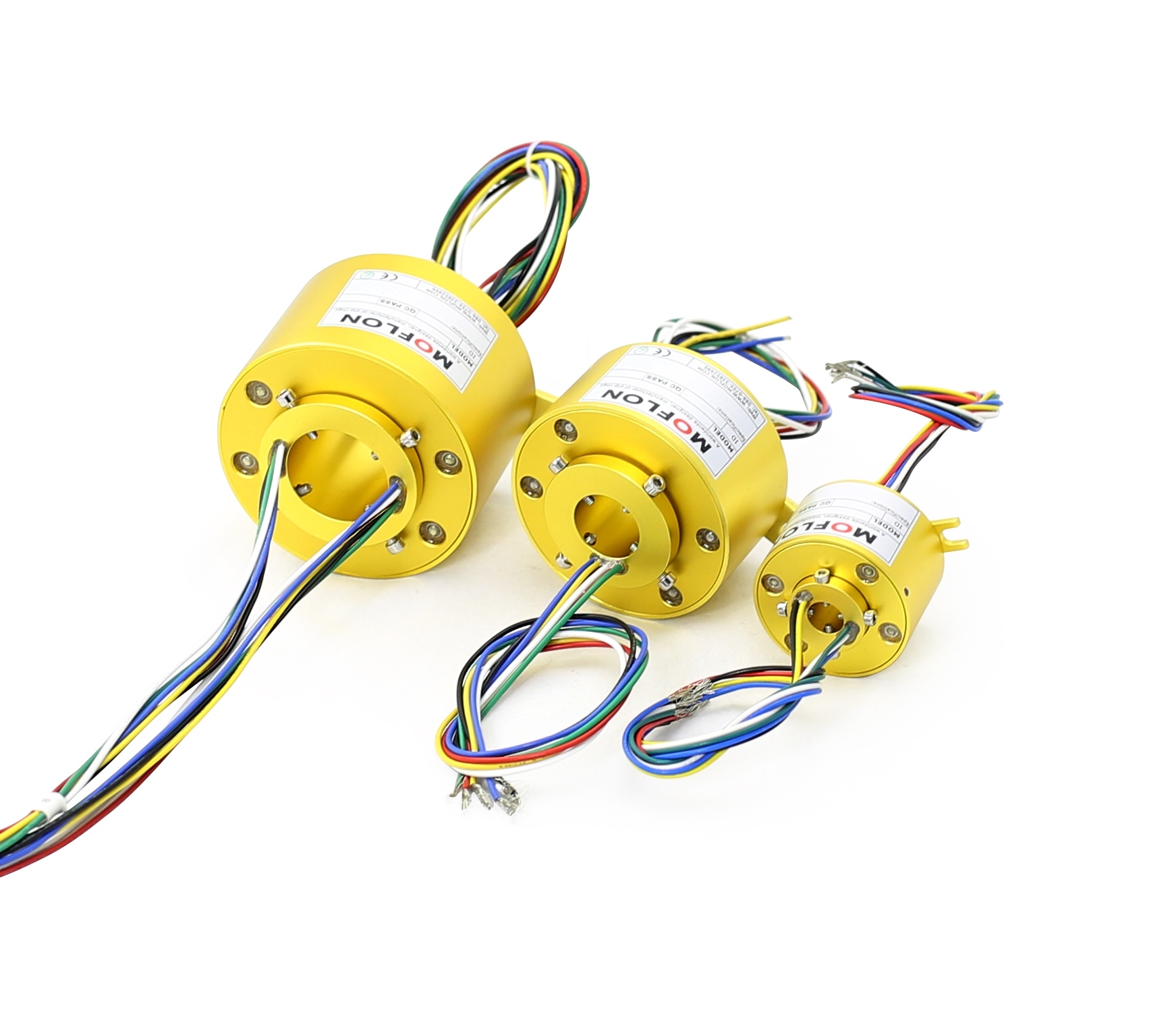
We don't believe in forcing your vision into a template. Every curve, every material, every finish—it's all driven by your direction and brought to life by hands that have refined their craft over decades. Our role is to interpret your taste, not impose ours, and that makes all the difference.
From the initial sketch to the final stitch, we walk you through a process that's as transparent as it is collaborative. You'll see samples, touch fabrics, and review details at each stage, ensuring nothing gets lost in translation. What you imagine is exactly what we build—no surprises, no shortcuts.
For us, expertise isn't just about skill; it's about listening. We combine time-tested techniques with a deep respect for your preferences, so the result feels unapologetically yours. Whether it's a subtle nuance or a bold statement, we'll execute it with precision, because your design deserves nothing less.
Conquering Vibration, Dust, and Moisture Seamlessly
Industrial environments throw a constant stream of challenges at equipment, and three of the most relentless are vibration, dust, and moisture. Instead of treating them as separate problems, we engineered a unified defense system that works quietly in the background. The chassis architecture absorbs and dissipates vibrational energy through a multi-layer dampening design, preventing it from reaching sensitive internal components. At the same time, carefully calculated pressure differentials and labyrinth seals create an invisible barrier that blocks fine particles and water without relying on bulky external covers.
Dust and moisture often find their way in through the smallest seams, so every joint, port, and connector was reimagined. Rather than simply adding gaskets that degrade over time, we used materials that expand and contract with temperature shifts, maintaining a constant seal. For high-vibration areas, the connections are not just tightened—they're bonded at the molecular level in key spots, turning potential weak points into barriers that stay intact even when the machine shakes violently during operation. This approach eliminates the gradual creep of contaminants that typically leads to premature failure.
The real measure of success is how these protections work together without requiring constant maintenance or sapping performance. The cooling airflow is shaped to push dust outward before it can settle, while drainage channels redirect moisture away from electronics in any orientation. Vibration, instead of loosening parts, actually helps the self-cleaning features by shaking debris loose from filter surfaces. It's not about building a fortress—it's about creating a system that stays clean and stable through its own natural behavior, adapting to harsh conditions as effortlessly as it performs its core function.
Transmitting High-Frequency Signals with Zero Loss
Pushing high-frequency signals through any medium inevitably exposes them to attenuation, skin effect losses, and dielectric absorption. The pursuit of zero-loss transmission means confronting these physical constraints head-on, often by rethinking conductor geometries and insulation materials from the ground up. Rather than accepting the gradual erosion of signal integrity, engineers experiment with unconventional waveguide structures and exotic dielectrics that exhibit near-perfect elastic response at gigahertz frequencies. It’s less about eliminating resistance altogether and more about coherently guiding the electromagnetic wave so that energy reflects constructively rather than dissipating as heat.
A practical leap comes from the use of superconducting transmission lines maintained below their critical temperature. In such environments, the surface resistance drops to vanishingly small levels, allowing signals to propagate with negligible attenuation. Combine this with cryogenic cooling and carefully impedance-matched terminations, and you edge into territory where a pulse can travel meters without measurable degradation. Still, this approach demands an ecosystem of thermal management and material purity unfamiliar to room-temperature electronics. It’s a striking demonstration, however, that the concept of lossless high-frequency signaling isn’t merely theoretical — it’s a reachable milestone under the right conditions.
Meanwhile, optical fiber technology offers another angle: modulate the high-frequency signal onto a light carrier and exploit the translucency of silica glass. In the infrared sweet spot, modern fibers achieve losses as low as 0.2 dB per kilometer — so minute that over short runs it’s effectively zero. By embedding millimeter-wave or terahertz intelligence onto optical carriers, one can tunnel through noisy environments without the signal smearing that plagues metallic paths. The trick isn’t transporting raw electrons but converting the information into a form that sidesteps resistivity, radiated crosstalk, and skin depth entirely. In a way, this blurs the line between electronics and photonics, showing that true zero-loss ambition sometimes means leaving copper behind.
Lightweight and Compact: Redefining Space-Constrained Systems
When every millimeter counts, hardware has to adapt. Our approach strips away unnecessary bulk without compromising integrity. By rethinking internal layouts and using advanced materials, we’ve managed to shrink critical components into forms that slide effortlessly into tight enclosures. It’s not just about making things smaller—it’s about making them smarter, so that limited space no longer limits what’s possible.
This philosophy extends beyond mere dimensions. We focus on thermal efficiency and power distribution in ways that allow fanless, closed-chassis designs to thrive. The result is a system that runs cooler and quieter, even when packed into corners where airflow is a luxury. Integration becomes painless, whether it’s retrofitting existing infrastructure or building something entirely new in a confined footprint.
The compact form factor doesn’t mean sacrificing connectivity or expandability. Thoughtful port placement and modular options ensure that you’re not forced to choose between saving space and staying versatile. It’s a deliberate balance—delivering full performance in a profile that disappears into any environment.
Global Reach, Local Precision: The Manufacturing Advantage
Combining a far-reaching global network with granular local insight transforms how products are made and delivered. It’s not just about having factories on multiple continents—it’s about weaving regional expertise directly into the production line. When a design team in Germany collaborates in real time with a materials specialist in Vietnam, the result isn’t compromise; it’s a sharper final product, tuned to both international standards and neighborhood expectations.
The real advantage surfaces when supply chains bend instead of break. A facility in Mexico might serve North American clients with rapid turnaround, while a sister plant in Poland mirrors that agility for European markets. Each site operates with an intimate understanding of local compliance, workforce capabilities, and cultural nuances—yet they share a common digital backbone. That dual lens means a last-minute market shift doesn’t cause panic; it’s simply rerouted, recalibrated, and executed without the customer ever noticing a ripple.
What ultimately sets this model apart is the everyday empowerment it gives to people on the ground. Engineers in Shanghai aren’t just following a global playbook—they’re adapting it with local materials and techniques, feeding those innovations back into the system. The result is a manufacturing ecosystem that feels personal despite its scale, consistently delivering products that fit a neighborhood’s rhythm while rolling out across the world.
FAQ
Chinese manufacturers have refined their engineering processes by integrating modular designs with advanced material science. This allows for compact, high-current transmission units that maintain signal integrity even under extreme rotational speeds. Many suppliers now offer customization for specific industrial needs, from wind turbines to robotic arms.
Through the use of precious metal alloy contacts and sealed, lubricant-free designs. The latest generation employs fiber brush technology that drastically reduces debris while maintaining consistent electrical performance over millions of cycles. This approach extends service intervals beyond traditional carbon-brush limitations.
Yes, hybrid configurations are commonplace. Specialized shielding and channel isolation prevent cross-talk between high-voltage power lines and sensitive Ethernet or CAN-bus signals. Some models even incorporate fiber-optic rotary joints for non-conductive data transfer, all within a single rotating interface.
Heavy industrial automation, offshore wind energy, medical imaging equipment like CT scanners, and defense turret systems are primary drivers. The push for higher reliability in harsh environments—from desert solar trackers to arctic radar installations—has fueled innovation in IP-rated and explosion-proof slip ring designs.
Certainly. Micro slip ring modules with diameters under 12mm are available, supporting dozens of circuits. These integrate directly into robot wrist joints without compromising articulation, using lightweight materials like titanium alloy housings. They effectively replace cable flexing, eliminating unexpected motion restrictions.
By employing dynamic balancing and multi-point contact systems. Vibration damping is achieved through resilient mounting structures and gold-gold contact interfaces that maintain low resistance even under shock loads. This is critical in applications like helicopter rotor de-icing where slip rings must endure constant buffeting.
Prototype development can be as short as four weeks for standard modifications. More complex, application-specific designs with integrated fluid channels or wireless pass-through may take eight to twelve weeks. Many suppliers maintain rapid-response engineering teams that work directly from CAD requirements without excessive iteration delays.
Conclusion
China Electrical Slip Rings lie at the core of modern rotating systems, where proven contact technology ensures uninterrupted power and signal flow. These components are engineered to handle the most demanding environments, conquering vibration, dust, and moisture seamlessly. Whether in wind turbines, robotics, or medical equipment, their robust design guarantees reliable performance under extreme conditions. The ability to transmit high-frequency signals with zero loss further sets them apart, making them ideal for applications requiring pristine data integrity, such as high-speed cameras or radar systems.
What truly distinguishes these solutions is the fusion of customization and manufacturing prowess. Every slip ring can be tailored to exact specifications without compromise, reflecting a deep collaboration between client vision and engineering expertise. Lightweight and compact designs redefine space-constrained systems, while a global reach paired with local precision ensures rapid delivery and support. This combination of technical excellence and flexible production makes China Electrical Slip Rings a smart choice for innovators seeking advanced, dependable connectivity in rotating assemblies.
Contact Us
Contact Person: Xiangpin Li
Email: [email protected]
Tel/WhatsApp: 86 186 1706 8578
Website: https://www.moflon.com