
Expert LV Switchgear Recommendations: How to Pick the Perfect Fit
2026-07-23
Selecting the ideal low-voltage switchgear can feel overwhelming, but expert guidance makes all the difference. At Chang Song, we believe the right choice balances safety, efficiency, and scalability for your unique power distribution needs. This guide cuts through the complexity, offering clear, practical advice to help you pinpoint the perfect fit without getting lost in technical jargon. Whether upgrading or starting fresh, discover what truly matters in LV switchgear selection.
Understanding Your Facility's Power Needs Before the Switchgear Hunt
A hasty switchgear purchase often starts with the equipment itself—ratings, form factors, delivery times. But the real foundation is an unvarnished look at how your facility consumes, distributes, and relies on electricity hour by hour. Start by mapping your load profile across typical operations, seasonal peaks, and unexpected surges. This isn’t just a snapshot of total kilowatts; it’s about identifying which circuits can never dip, which ones tolerate brief interruptions, and where harmonics or inrush currents hide. Overlooking these patterns means you risk selecting gear that fits on paper but strains in practice, leading to nuisance tripping or premature aging.
Next, examine the physical and environmental constraints that set boundaries for any new installation. Cable entry points, available floor space, ambient temperature swings, and even humidity or dust levels can quietly dictate what will actually work. A switchgear lineup that demands forced cooling in a poorly ventilated basement adds cost and complexity you may not notice until commissioning. Likewise, think about future growth: will you need additional feeder breakers two years from now? Building in modular expansion capability now avoids costly switchgear surgery later. When you know the true spatial and environmental envelope, you sidestep the trap of cramming in equipment that fits the catalog but not the room.
Finally, bring maintenance and operational realities into the equation well before comparing vendors. If your team struggles to safely rack out a draw-out breaker during a midnight outage, a seemingly robust design loses its shine. Arc-flash mitigation strategies, remote operation capabilities, and straightforward component access matter more than glossy spec sheets suggest. Talk to the people who will live with the gear daily—their insights about sequence-of-operation pain points or labeling clarity often reveal what the datasheets leave out. Aligning the switchgear's design with your crew's real-world workflows ensures the solution remains manageable long after the sales engineer hands over the keys.
Decoding Voltage, Current, and Fault Ratings Without the Jargon
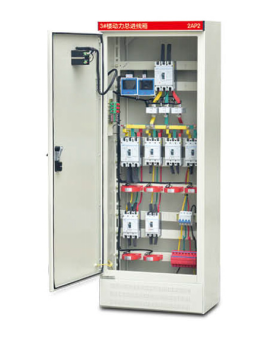
Electrical ratings on devices and components often look like a secret code, but they're really just a straightforward set of limits that keep everything running safely. Voltage is the pressure pushing electricity through a circuit, and the rating tells you the maximum that insulation or components can handle before they break down. Current, measured in amps, represents the flow of electricity, and the rating warns you how much can pass through without overheating wires or damaging internal parts. Think of it like a garden hose: voltage is the water pressure, current is the flow rate, and the ratings are the hose's burst pressure and maximum flow capacity.
Fault ratings, on the other hand, are a bit more specialized but equally important. They describe how much stress a device can take during an abnormal event, like a short circuit, without failing catastrophically. For example, a circuit breaker might have an interrupting rating of 10,000 amps, meaning it can safely break a fault current up to that level. Surge protectors have joule ratings that indicate how much surge energy they can absorb before giving out. These aren't everyday operating numbers, but they matter when things go wrong—like knowing your car's airbag deployment threshold.
You don't need an electrical engineering degree to make sense of these numbers; just compare them to the demands of your setup. A power supply rated for 12V and 2A delivers a steady 12 volts and can supply up to 2 amps of current—if your device draws more, the supply might overheat or shut down. Motor controllers often list peak current ratings alongside continuous ones, giving you wiggle room for startup surges. By matching these ratings to your actual load and environment, you sidestep overheating, nuisance tripping, and premature failure, all without drowning in technical jargon.
Matching Switchgear Types to Real-World Applications
Selecting the right switchgear isn't just about voltage levels or current ratings—it’s about understanding the environment where the equipment will live and breathe. For instance, an outdoor substation exposed to salt spray and high humidity demands corrosion-resistant enclosures, often stainless steel or specially coated, along with conformal coatings on internal components. Meanwhile, indoor installations in controlled environments can use standard metal-clad designs. The type of insulation medium plays a huge role here: air-insulated switchgear (AIS) is cost-effective for spacious industrial settings, but gas-insulated switchgear (GIS) becomes the only practical choice when space is tight, like in urban basements or offshore platforms, where its compact footprint and resistance to environmental contaminants truly shine.
Beyond the physical setting, the actual electrical duties of the switchgear shape the decision. A simple main-tie-main arrangement might suffice for a commercial building where continuity of service is secondary to budget, but critical processes—think semiconductor fabs or data centers—lean heavily on redundant ring main units or arc-resistant designs that isolate faults instantly. The application’s fault level and switching frequency are also key: high-speed reclosers in distribution networks see far more operations than a transformer feeder breaker, so they require mechanical endurance that goes beyond standard specs. Matching the interrupting medium to the task is vital—vacuum circuit breakers handle moderate voltages with minimal maintenance, while SF6 units manage higher capacities but demand careful handling due to environmental regulations. Some modern installations even blend hybrid solutions, like using solid-insulated busbars with vacuum interruption, to tailor performance without overspending.
There’s also the human factor that often gets overlooked: who will operate and maintain this gear? A remotely monitored substation might prioritize advanced digital relays and self-diagnostics, whereas a local maintenance team familiar with electromechanical controls will do better with simpler, tactile interfaces. The choice between withdrawable versus fixed breaker designs comes down to how quickly you need to swap a unit during an outage—petrochemical plants often insist on draw-out types for rapid replacement, while a secondary distribution panel in a school can live with fixed breakers. Even seemingly minor details like cable entry positions or busbar accessibility can make or break an installation’s long-term reliability, so it pays to involve the end-user’s engineering team early in the specification process rather than relying on a one-size-fits-all solution.
Space, Environment, and Maintenance: The Overlooked Decision Factors
When weighing options for a major purchase or commitment, most people zero in on upfront costs and headline features. They rarely give enough thought to the space it will occupy, the environment it demands, or the maintenance it requires. These three factors quietly shape daily satisfaction far more than any spec sheet suggests. A cramped room saps comfort, a noisy neighborhood erodes peace, and constant upkeep drains time and money—often without immediate warning signs.
Physical space is not just about square footage; it’s about how a thing fits into your life. A gadget that looks sleek in a showroom might feel intrusive in a compact living area, while an outdoor setup that seems expansive on a plan can overwhelm a modest yard. Similarly, the surrounding environment—light, sound, humidity, foot traffic—determines whether you’ll actually enjoy what you’ve brought home. And then there’s maintenance, the silent drain. What starts as a minor wipe-down routine can spiral into expensive specialist care or hours of lost weekends, turning an asset into a chore.
Smart decisions come from looking beyond the obvious. Before signing off, mentally step into the daily reality: will this thrive in my actual surroundings, and do I have the patience for its long-term demands? It’s often the overlooked details that define whether you’ll love something or eventually regret bringing it into your life.
Future-Proofing: Scalability and Smart Integration in Modern Switchgear
Modern power distribution networks are in constant flux, shaped by shifting load demands, renewable integration, and tightening efficiency mandates. Switchgear that cannot adapt quickly becomes a liability. Scalability in this context isn’t just about adding a few extra breakers—it’s about designing systems where physical footprints, bus ratings, and protection schemes can be expanded without wholesale rebuilds. Modular architectures, withdrawable functional units, and plug‑in connection points all play a role. The goal is to let facilities add capacity incrementally, without the downtime or cost that typically accompanies upgrades in monolithic gear. This kind of forward‑looking design treats expansion not as an afterthought, but as an embedded operational feature.
Beyond physical expansion, smart integration bridges the gap between raw hardware and the data‑driven world. Today’s switchgear can be equipped with sensors, embedded controllers, and standard communication protocols that feed real‑time analytics into facility management platforms. Rather than waiting for a failure or routine inspection, operators gain continuous insight into thermal performance, breaker health, energy flows, and harmonic distortion. This layer of intelligence transforms a passive distribution board into an active participant in energy strategy. By pulling in data from disparate points and applying predictive algorithms, facilities can shift maintenance from reactive to condition‑based, shedding unnecessary expenses while extending asset life.
True future‑proofing also means keeping the door open for emerging technologies that haven’t yet reached mainstream adoption—like solid‑state switching, DC‑native distribution for renewables and storage, or tighter integration with microgrid controllers. A scalable, smart‑ready switchgear platform doesn’t lock an operation into today’s constraints. It acknowledges that tomorrow’s load profile, generation mix, and regulatory landscape will differ from today’s. By building in flexibility at both the hardware and communication levels, and by choosing standards that support interoperability, modern switchgear can evolve alongside the site it serves, avoiding early obsolescence and protecting the initial capital outlay over a significantly longer lifecycle.
Navigating Compliance and Safety Without the Headache
Keeping up with evolving regulations can feel like a full-time job on its own. The trick isn’t just knowing the rules—it’s weaving them into daily operations so smoothly that they become second nature. Small, consistent checks and a culture that values speaking up over ticking boxes often prevent the big headaches before they start.
When something does slip through the cracks, a clear, non-punitive reporting path makes all the difference. People need to feel safe sharing near misses or honest mistakes without fear of blame. That openness turns potential disasters into learning moments and strengthens the whole system.
Technology can lighten the load, but only if it’s designed around real workflows—not the other way around. The best tools fade into the background, offering gentle nudges and easy access to guidance exactly when and where they’re needed, keeping compliance achievable without adding noise.
FAQ
Start by nailing down the electrical load requirements—total current, short-circuit ratings, and future expansion plans. The switchgear must handle both normal operation and fault conditions without breaking a sweat.
It boils down to maintenance and uptime. Withdrawable units let you swap or service individual modules quickly with minimal downtime, while fixed versions are more budget-friendly if you rarely need to isolate circuits.
The Ingress Protection rating tells you how well the enclosure keeps out dust and water. In a dusty factory or damp basement, a higher IP rating can mean the difference between reliable performance and constant faults.
Air-insulated breakers are common and cost-effective for most commercial setups. Vacuum breakers shine in harsh environments or where you need long maintenance intervals and superior arc quenching.
A big one is overlooking the ambient temperature. If the switchroom runs hot, you need derating curves—otherwise breakers may trip unexpectedly. Another is ignoring future load growth, which leads to premature upgrades.
Check for native communication protocols like Modbus or Profibus in the trip units and metering. A switchgear that speaks the same language as your BMS avoids costly gateways and simplifies real-time monitoring.
Absolutely if personnel safety is a concern. Arc-fault rated switchgear contains the explosion and pressure in a worst-case scenario, protecting operators and limiting equipment damage—often required by modern safety codes.
Conclusion
Picking the right low-voltage switchgear starts with a clear-eyed look at what your facility actually needs—not just today, but in the years ahead. Too many teams jump straight into comparing specs without first mapping out their real load profile, peak demands, and the nature of the equipment being served. That front-end homework makes all the difference when you’re staring at a wall of technical ratings. Voltage and current values are one thing, but it’s the fault ratings that tend to trip people up: you need gear that can handle a short-circuit event without turning into a hazard, and that means looking beyond the nominal numbers. Equally important is matching the switchgear type to how it’ll be used. A main distribution board in an industrial plant has a completely different mission from a sub-panel in a commercial high-rise, and confusing the two leads to either overpaying or under-protecting. This is where practical experience matters more than catalog language.
Beyond the electrical parameters, the physical world asserts itself in ways that are easy to overlook until it’s too late. Space constraints, ambient temperature, dust, humidity, and access for maintenance can make or break an installation, especially in retrofits where the room wasn’t designed with the gear in mind. Then there’s the looming question of tomorrow: will the setup expand, will you add smart monitoring, energy management, or tie into a building automation system? Modern switchgear should at least offer a path for that integration without a full rip-and-replace. And while nobody gets excited about compliance, treating safety standards and local codes as an afterthought is a direct route to costly delays. When you weave these threads together—real needs, honest environmental assessment, future flexibility, and code readiness—the choice becomes less about features and more about a fit that will hold up for the long haul.
Contact Us
Contact Person: Tonglun Chen
Email: [email protected]
Tel/WhatsApp: 8618906642555
Website: https://www.cncsele.com