
High Evaluation Switch Cabinet: Essential Guide to Top Performance
2026-07-23
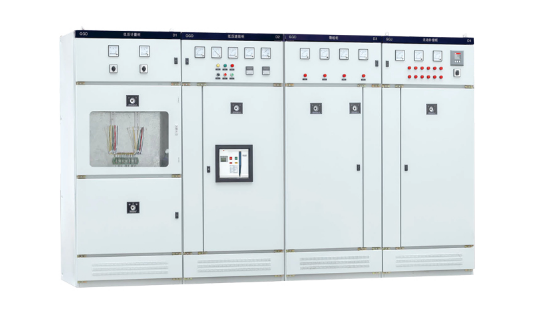
When it comes to electrical distribution, the switch cabinet is the heart of reliability. But not all cabinets are built equal—high evaluation models set the benchmark for safety and efficiency. Enter Chang Song, a name trusted for delivering top-tier performance that engineers swear by. If you’re tired of second-guessing your equipment’s capability, this guide reveals what truly makes a switch cabinet rise above the rest.
What Separates Top-Tier Cabinets from the Rest
Top-tier cabinets distinguish themselves through an unwavering commitment to material selection and construction integrity. While ordinary options often rely on particleboard or thin veneers that degrade over time, premium cabinets utilize furniture-grade plywood, solid wood frames, and dovetail joinery to create structures that withstand decades of daily use. The difference becomes apparent in the subtle details: soft-close mechanisms that operate silently, perfectly aligned door reveals, and finishes that resist moisture, scratches, and UV fading. These choices aren't just about aesthetics—they're an investment in longevity that eliminates the need for premature replacements.
Beyond raw materials, the design philosophy behind luxury cabinetry bridges the gap between functional storage and architectural statement. Customization sits at the heart of this: instead of forcing standard sizes into awkward spaces, master craftsmen tailor every dimension, from pull-out spice racks to integrated appliance garages, ensuring the kitchen feels like a cohesive extension of the home rather than a collection of boxy modules. The result is a space where workflow feels intuitive, and even neglected corners become purposeful.
Finally, the finishing process separates the exceptional from the mediocre. Hand-sanded surfaces, multi-layered stains that highlight natural grain patterns, and conversion varnishes that cure to a furniture-grade sheen—these steps require patience and skill that mass production simply can't replicate. It’s the sort of meticulousness that turns a kitchen island into a gathering spot you’ll run your hand over without thinking, confident it will stay beautiful through spills, sunlight, and the chaos of everyday life.
Key Metrics That Actually Predict Long-Term Reliability
When assessing whether a product or system will hold up over time, certain numbers cut through the noise. Mean Time Between Failures (MTBF) often gets top billing, but it's a theoretical average that can mask real-world behavior. A more telling metric is the failure rate curve over the lifecycle—specifically, how quickly early-life “infant mortality” drops off and how steeply wear-out failures rise later. Tracking the Weibull shape parameter from field data, for instance, reveals patterns that MTBF alone never captures.
Beyond failure times, look at degradation rates under sustained stress. Components rarely fail without warning; they drift. Capacitance loss in electrolytics, threshold voltage shifts in transistors, or creep in mechanical linkages all follow predictable trajectories if you measure them regularly. The key is establishing acceptable drift limits during accelerated testing and correlating them to long-term reliability. A product that survives 1,000 hours of burn-in but shows 5% parameter shift per 100 hours thereafter is far riskier than one with stable readings, even if both pass the same pass/fail gate.
Finally, pay attention to repair and maintenance data. Metrics like corrective maintenance frequency per year or the percentage of no-fault-found returns tell you how reliably a design performs in actual use—not just on paper. A system that requires frequent recalibration or trips offline for unexplained reasons already signals latent reliability gaps. Coupling these operational insights with physics-of-failure analysis closes the loop, turning reactive fixes into proactive design improvements.
Common Oversights During Cabinet Selection
It’s tempting to fill a cabinet with familiar faces or those who’ve been loyal throughout the campaign, but this often leads to a team lacking the breadth of perspective needed for governing. The excitement of victory can cloud judgement, causing leaders to overlook whether a candidate has actually run anything substantial before. A history of loyalty doesn’t automatically translate into the ability to manage a complex department under public scrutiny. Real oversight often starts when the selection process is treated as a reward system rather than a deliberate assembly of governing competence.
Another slip happens when the focus is purely on individual star power instead of how the group will function together. A cabinet isn’t a collection of solo acts; it’s a collaborative body that needs to share information, challenge each other constructively, and present a unified front. Overlooking interpersonal dynamics or ideological mismatches can create friction that stalls policy for months. Even the most brilliant candidate becomes a liability if their ego or working style fractures the team.
Then there’s the rushed vetting that misses quiet but critical red flags. In the haste to announce a full slate, financial entanglements, past statements, or undisclosed conflicts of interest can slip by. These surface later, turning an avoidable embarrassment into a full-blown crisis that taints the entire administration from the start. A proper check isn’t just about legality—it’s about how a history of poor judgement might play out when amplified by the office they’re about to hold.
How Operational Environment Shapes Performance
The operational environment—the sum of physical, cultural, and procedural factors surrounding daily work—dictates more about performance than most leaders acknowledge. A cramped, noisy workspace disrupts focus and accelerates fatigue, while a well-designed layout can slash wasted motion and errors. Similarly, the invisible currents of team culture, from psychological safety to the unwritten rules of communication, either lubricate collaboration or grind it to a halt. When conditions make it easy to do the right thing, performance climbs naturally; when they add friction, even the most talented teams struggle.
Consider how the pace and unpredictability of an environment rewires decision-making. In a stable, predictable setting, people can rely on routines and deliberate analysis. Throw in constant disruptions or high-stakes surprises, and performance hinges on adaptability: the ability to abandon plans, re-prioritize in seconds, and maintain composure under pressure. This isn't just about resilience—it's about how the context trains the brain to either seek familiar patterns or stay alert to novelty. Over time, the environment sculpts cognitive habits that become second nature, for better or worse.
What's often overlooked is the feedback loop between environment and identity. A setting that signals high standards and trust can elevate an employee's self-expectations, turning a routine job into a craft. Conversely, an environment that tolerates mediocrity or micromanagement erodes intrinsic motivation, making people show up as lesser versions of themselves. The physical and social landscape doesn't just enable tasks—it tells a story about who people are and what they're capable of, and that narrative directly shapes the energy, creativity, and persistence they bring to their work.
Maintenance Habits That Extend Cabinet Lifespan
Routine cleaning might seem trivial, but how you do it makes a huge difference. Instead of harsh sprays, use a soft cloth dampened with mild soap and water. Wipe along the wood grain to avoid scratches, and always dry immediately to prevent moisture from seeping into joints. For hardware, a quick buff with a dry microfiber cloth keeps finishes from dulling. This simple habit prevents grime buildup that can slowly wear down protective coatings.
Overloading cabinets is a silent culprit behind premature failure. Heavy dishes or stacked canned goods strain hinges and pull shelves out of alignment over time. Distribute weight evenly, storing dense items on lower shelves and using sturdy organizers to keep things from shifting. A quick monthly check of hinge screws—tightening any that have loosened—adds years to door life and keeps everything hanging true.
Ignoring small issues invites bigger problems. A sticky drawer or slightly misaligned door often signals a loose screw or minor swelling that is easy to fix now. Keep a small repair kit with wood glue, extra screws, and felt bumpers handy. Addressing these micro-failures right away keeps daily friction from turning into structural cracks or split frames, preserving the cabinet’s integrity long-term.
When Next-Gen Features Become a Necessity
Initially, what we call 'next-gen' often feels like a luxury—a flashy addition that's nice to have but not essential. However, as technology becomes woven into the fabric of daily life, these features quietly shift from optional to indispensable. Think of high-refresh-rate screens: once a niche perk for gamers, they're now expected on any premium device because they make every interaction feel smoother and more responsive.
This transition isn't driven solely by consumer demand. It's a natural byproduct of how infrastructure and ecosystems evolve. When a critical mass of users adopts a new capability, developers and manufacturers start building around it as a baseline. Features like biometric authentication or real-time language translation were once futuristic concepts; today, their absence in a product feels like a glaring omission rather than a missing upgrade.
Ultimately, the line between 'nice-to-have' and 'must-have' blurs with accelerating speed. What starts as a competitive differentiator quickly becomes the new standard, pushing entire industries forward. This constant redefinition of the baseline is what keeps innovation relentless and makes it challenging to imagine going back to a time when such capabilities didn't exist.
FAQ
A high evaluation switch cabinet consistently surpasses basic operational requirements by delivering exceptional reliability, safety, and adaptability. It’s characterized by how it handles real-world stress—think arc flash containment, robust ingress protection, and seamless integration with digital monitoring. The evaluation reflects not just test results, but long-term field performance and ease of maintenance.
Key indicators go beyond standard specs like short-circuit withstand strength and insulation integrity. True top performers excel in internal arc class, temperature rise under sustained load, and actual mean time between failures. They also show consistent behavior across varied environmental conditions, not just controlled labs, and provide clear diagnostic access for outage prevention.
Build quality is foundational. Cabinets with reinforced frames, corrosion-resistant alloys, and precision‑sealed seams naturally score higher because they resist mechanical and environmental wear. Poor construction leads to misalignment, ground faults, and early component fatigue. A well‑built cabinet maintains structural integrity during faults and shields sensitive electronics from interference.
Thermal management often makes the critical difference. Leading designs use computational fluid dynamics to optimize passive airflow, and they incorporate active cooling only if necessary, keeping energy consumption low. By preventing hot spots that accelerate insulation breakdown and contact oxidation, they extend service life and maintain performance consistency even under heavy, continuous loads.
Safety features directly lift the evaluation because they protect both equipment and personnel. Arc‑resistant compartments, fast‑acting pressure relief, and fully interlocked access covers go beyond basic compliance. Extra measures like arc‑quenching systems and remote switching capabilities demonstrate a design philosophy centered on risk elimination, not just mitigation.
Modularity transforms switch cabinets from static assets into dynamic systems. It allows users to reconfigure circuits, add monitoring, or replace components without complete shutdowns. High‑evaluation models support tool‑free busbar changes and flexible compartment dividers, which slashes downtime and future‑proofs the installation against evolving needs.
Maintenance intervals aren’t fixed; they depend on environmental factors like dust, humidity, and load cycling. However, a benchmark is a comprehensive thermal and mechanical check every 18 months, supplemented by continuous partial discharge monitoring where possible. Proactive cleaning of ventilation paths and torque verification on connections can prevent subtle degradation that shortens lifespan.
Advancements will likely focus on embedded intelligence—sensing elements that monitor everything from busbar temperature to arc‑flash readiness in real time. Solid‑state switching devices will eliminate mechanical wear, while additive‑manufactured components enable complex cooling geometries. The real shift will be toward cabinets that self‑diagnose and integrate directly with asset management platforms, pushing evaluation criteria toward predictive reliability scores.
Conclusion
Selecting a high-evaluation switch cabinet goes beyond basic specifications—it demands a deep look into what truly separates top-tier units from the rest. The best cabinets achieve exceptional arc-flash containment, thermal management, and modular flexibility, built on designs proven through rigorous type-testing rather than marketing hype. Key metrics like internal arc classification, temperature-rise limits under full load, and mechanical endurance ratings offer genuine predictors of long-term reliability, yet these are often overlooked in favor of superficial cost comparisons. A common oversight is ignoring how the operational environment—be it dust, humidity, or corrosive atmospheres—can silently degrade performance, making IP ratings and anti-condensation measures just as critical as electrical specs. Without aligning cabinet selection to real-world conditions, even premium brands can underperform.
Sustaining top performance also hinges on maintenance habits that extend lifespan: thermal imaging, torque checks on busbar joints, and keeping ventilation paths clear prevent small issues from escalating into failures. Crucially, next-gen features like integrated partial discharge monitoring, smart sensors, and compatibility with digital substation protocols shift from nice-to-have to necessity when uptime and safety are paramount. The ultimate guide to high evaluation is not just about buying a cabinet but engineering a system where every component—from busbar bracing to software analytics—works in harmony under the actual stresses of your facility.
Contact Us
Contact Person: Tonglun Chen
Email: [email protected]
Tel/WhatsApp: 8618906642555
Website: https://www.cncsele.com