
Maximizing Transformers: The Future of Current Transformer Technology
2026-01-10
In the rapidly evolving landscape of AI and machine learning, transformer models have emerged as game-changing architectures, revolutionizing everything from language processing to computer vision. Yet, as we strive to push the boundaries of what's possible, the question remains: how can we truly maximize these powerful tools for real-world impact? In this blog post, we'll explore the cutting-edge advancements and future trajectories of current transformer technology—unpacking innovations that promise to enhance efficiency, scalability, and applicability. At Lugao, we're committed to leveraging these breakthroughs to drive transformative solutions across industries. Join us as we delve into the exciting potential of maximizing transformers, and discover how this evolution could reshape the AI ecosystem. Whether you're a developer, researcher, or tech enthusiast, you'll find insights here to spark your curiosity and guide your next steps.
Revolutionizing Efficiency: Cutting-edge Strategies for Transformer Performance
In the rapidly evolving field of artificial intelligence, transformer models have become the backbone of modern natural language processing and beyond, but their computational demands often hinder real-world deployment. To tackle this, researchers are pushing boundaries with innovative techniques that not only speed up inference but also reduce resource consumption. For instance, knowledge distillation methods are now being refined to transfer insights from larger models into compact versions, enabling efficient performance without sacrificing accuracy. This shift allows organizations to deploy sophisticated AI solutions even on edge devices, opening up new possibilities in fields like healthcare diagnostics and autonomous systems where latency and power constraints are critical.
Another breakthrough involves dynamic attention mechanisms that adaptively adjust the focus of transformers based on input complexity, rather than relying on static architectures. By prioritizing relevant tokens and skipping unnecessary computations, these strategies significantly cut down processing time while maintaining high-quality outputs. This approach has shown promise in applications like real-time translation and video analysis, where every millisecond counts. Moreover, advances in hardware-software co-design are playing a key role, with specialized accelerators being developed to optimize transformer operations directly at the chip level.
Looking ahead, the integration of sparsity techniques and model parallelism is setting new benchmarks for efficiency. By exploiting the inherent redundancy in transformer weights, sparsity methods prune less important connections, leading to leaner models that run faster and consume less memory. Combined with distributed training frameworks, these strategies enable scaling to massive datasets without overwhelming computational resources. This holistic view of performance optimization ensures that transformers can continue to drive innovation across diverse sectors, from finance to creative arts, while staying agile and cost-effective.
Beyond Basics: Advanced Techniques in Modern Transformer Architecture
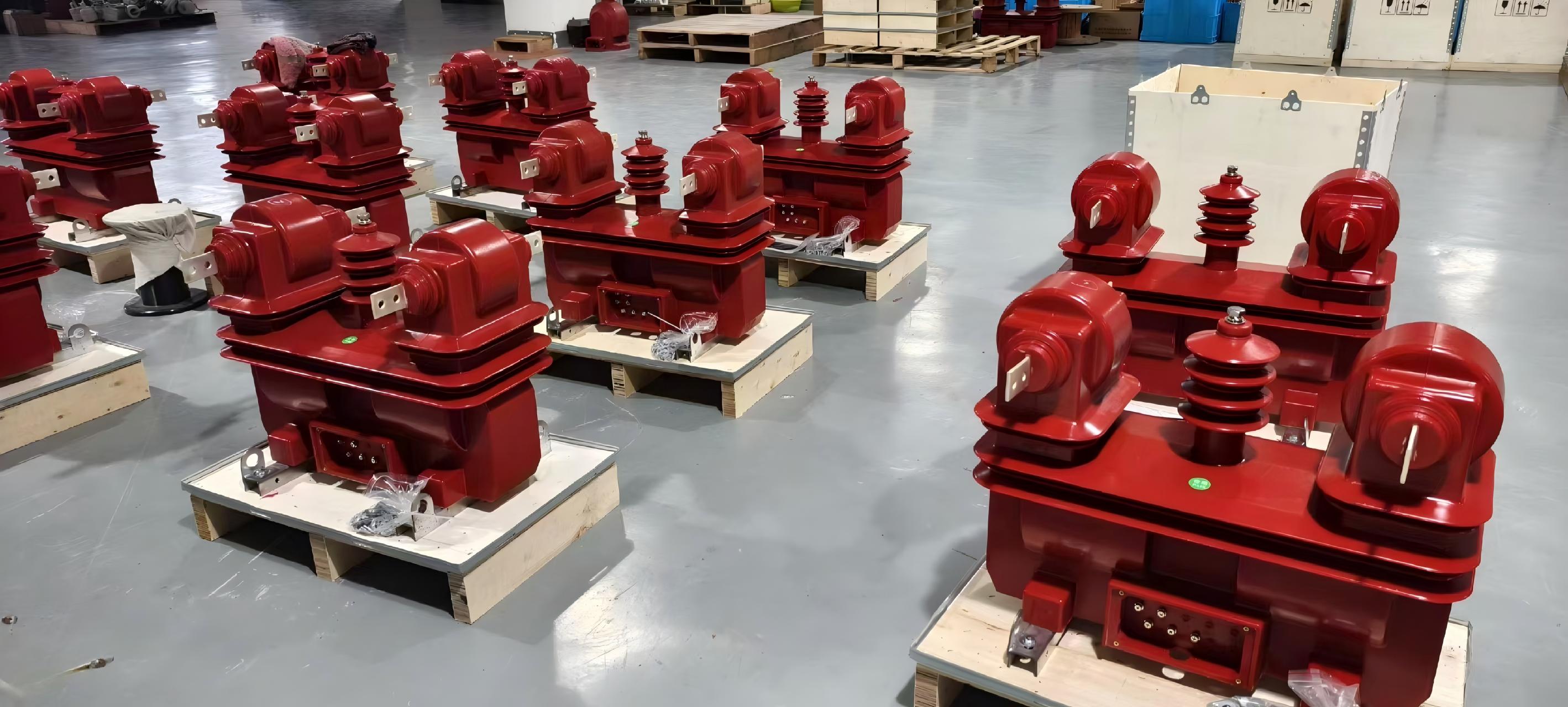
Modern Transformer architectures have evolved significantly since their inception, moving beyond foundational layers like self-attention to incorporate techniques that enhance performance and adaptability. For instance, sparse attention mechanisms reduce computational overhead by focusing on relevant tokens, enabling models to handle longer sequences efficiently. Additionally, innovations such as Rotary Position Embeddings (RoPE) improve stability and generalization by encoding positional information more dynamically than traditional methods.
Another key advancement lies in model scaling and optimization, where strategies like mixture-of-experts (MoE) architectures allow for parameter sharing across specialized sub-networks, boosting capacity without proportionally increasing inference costs. Techniques such as knowledge distillation and gradient checkpointing further refine training processes, making it feasible to deploy complex models in resource-constrained environments. These methods not only push the boundaries of accuracy but also address practical challenges in real-world applications.
Emerging trends also include integrating Transformers with other neural paradigms, like graph neural networks or reinforcement learning, to tackle tasks requiring structured reasoning or sequential decision-making. By blending these approaches, developers can create hybrid systems that leverage Transformer strengths while mitigating limitations, such as handling non-Euclidean data. This cross-pollination of ideas continues to drive innovation, ensuring Transformers remain versatile tools in the AI toolkit.
Practical Applications: Real-world Use Cases and Implementation Insights
From automating customer support with chatbots to optimizing supply chains through predictive analytics, real-world applications of technology are transforming industries. For instance, a retail company might integrate AI to analyze shopping patterns, resulting in personalized recommendations that boost sales and customer loyalty. These implementations often reveal hidden efficiencies, such as reducing manual errors in inventory management, showcasing how practical solutions can directly impact operational performance and cost savings.
In healthcare, wearable devices and data platforms are being used to monitor patient health in real-time, allowing for early intervention and personalized treatment plans. One notable case involves a hospital system that deployed remote monitoring tools, cutting down readmission rates by leveraging insights from continuous data streams. This approach not only enhances patient outcomes but also highlights the importance of seamless integration with existing workflows to ensure adoption and effectiveness in fast-paced environments.
For businesses looking to scale, implementing cloud-based solutions offers a flexible way to manage resources and collaborate across teams. A tech startup, for example, might adopt containerization technologies to streamline development and deployment, speeding up product launches while maintaining security. Such insights underscore the value of choosing adaptable tools that evolve with organizational needs, avoiding common pitfalls like vendor lock-in and ensuring sustainable growth through iterative refinement of strategies.
Innovative Models: Emerging Trends and Future Developments in Transformers
In the rapidly evolving landscape of AI, transformer architectures are witnessing significant innovations beyond the basic encoder-decoder frameworks, with trends pointing toward more efficient and adaptable models. For instance, sparse attention mechanisms, such as those seen in Longformer and BigBird, are gaining traction by overcoming the quadratic complexity limitations of traditional self-attention. These models enable the processing of longer sequences without compromising performance, making them ideal for tasks like document summarization or analyzing extensive legal or scientific texts. Another emerging trend is the integration of transformers with other neural network types, like convolutional layers in Vision Transformers (ViTs) or recurrent units in hybrid models, which enhance their applicability across diverse domains such as computer vision and time-series analysis. These advancements are not merely incremental; they represent a fundamental shift toward versatile architectures that can handle multimodal data seamlessly.
Looking ahead, the future of transformers is poised to be shaped by developments in areas like unsupervised learning and meta-learning, which aim to reduce reliance on large labeled datasets. Models like GPT-4 and beyond are pushing the boundaries of few-shot and zero-shot learning, allowing them to generate coherent text or solve problems with minimal task-specific training. Moreover, there is a growing emphasis on energy-efficient transformers, driven by environmental concerns and the need for deployment in resource-constrained settings. Techniques such as model pruning, quantization, and knowledge distillation are being refined to create smaller, faster variants without sacrificing accuracy. These innovations could democratize access to powerful AI tools, enabling their use on edge devices or in developing regions where computational resources are limited, ultimately fostering more inclusive technological progress.
Beyond technical refinements, the trajectory of transformer models is increasingly influenced by interdisciplinary applications and ethical considerations. For example, in healthcare, transformers are being adapted for drug discovery and medical diagnosis, leveraging their ability to parse complex patterns in biological data. Meanwhile, in creative fields, AI-driven transformers are generating art, music, and literature, raising questions about authorship and creativity that spark broader societal debates. To stand out in this crowded field, future developments may focus on interpretability and transparency, ensuring that these models are not just powerful but also understandable and trustworthy. By integrating feedback loops from real-world use cases, researchers can tailor transformers to address specific challenges, from climate modeling to personalized education, thus moving beyond generic benchmarks to deliver tangible, human-centric solutions that resonate across industries.
Optimization Hacks: Tips for Enhancing Speed and Accuracy in Transformers
When working with transformer models, one often overlooked yet effective strategy is to optimize the attention mechanism by pruning heads that contribute minimally to the task at hand. This selective reduction reduces computational overhead and can boost inference speed without compromising accuracy, as it allows the model to focus on more relevant features.
Another practical hack involves fine-tuning the model's hyperparameters, such as learning rate schedules and batch sizes, tailored to the specific dataset and hardware setup. By implementing adaptive techniques like gradient accumulation or mixed precision training, users can achieve faster convergence and improved stability, leading to more accurate predictions in less time.
Incorporating techniques like distillation from larger models or leveraging pre-trained embeddings can significantly cut down on training time while enhancing performance. A nuanced approach involves ensemble methods with lightweight models, which balance speed and accuracy by combining predictions efficiently, avoiding the full computational load of a single complex architecture.
Challenges and Solutions: Addressing Common Pitfalls in Transformer Technology
Transformer technology, while revolutionary in natural language processing and beyond, faces several key challenges that can hinder its effectiveness in real-world applications. One common pitfall is the high computational cost and memory requirements, especially for large models, which can make deployment in resource-constrained environments impractical. Additionally, these models often struggle with handling long sequences due to attention mechanisms that scale quadratically with sequence length, leading to inefficiencies and potential information loss in tasks requiring extensive context. Another issue is their tendency to generate repetitive or incoherent outputs, particularly in text generation, where they may produce generic or nonsensical phrases without proper constraints. To address these challenges, various solutions have emerged. Techniques like model pruning, quantization, and knowledge distillation help reduce model size and computational demands, enabling more efficient inference. For handling long sequences, approaches such as sparse attention mechanisms, linear transformers, or hierarchical models break down the quadratic bottleneck, improving scalability. To mitigate repetitive outputs, methods like nucleus sampling, temperature tuning, or reinforcement learning with human feedback encourage more diverse and coherent generation. These strategies collectively enhance the robustness and practicality of transformer models in diverse scenarios.
Beyond computational and generative issues, transformers also confront challenges related to data bias and interpretability. They can inadvertently learn and propagate biases present in training data, leading to unfair or skewed outputs in sensitive applications like hiring or content moderation. Moreover, their black-box nature makes it difficult to understand decision-making processes, which is critical for trust and debugging in fields like healthcare or finance. Solutions to these pitfalls include implementing fairness-aware training techniques, such as adversarial debiasing or data augmentation with balanced datasets, to reduce bias. For interpretability, tools like attention visualization, saliency maps, or model probing help shed light on how transformers process information, allowing developers to identify and correct problematic patterns. Combining these approaches with robust evaluation metrics ensures that transformer technology not only performs well but also aligns with ethical and transparent standards.
Another significant challenge in transformer technology is adapting pre-trained models to specific domains or tasks without extensive retraining, as this can be time-consuming and data-intensive. This often results in suboptimal performance on niche applications, such as medical text analysis or legal document summarization, where specialized knowledge is key. Solutions involve fine-tuning strategies like parameter-efficient methods (e.g., adapter layers or prompt tuning) that require less data and compute by adjusting only small parts of the model. Domain adaptation techniques, such as transfer learning with domain-specific pre-training or data augmentation using in-context examples, further enhance relevance and accuracy. By leveraging these solutions, organizations can deploy transformer models more flexibly and cost-effectively, tailoring them to unique needs while maintaining high performance. Addressing these pitfalls not only improves technical outcomes but also broadens the accessibility and impact of transformer technology across industries.
FAQ
Next-generation Transformers enhance computational efficiency and context handling, focusing on scaling laws and adaptive mechanisms that optimize performance across diverse tasks.
They utilize advanced attention mechanisms like sparse or linear attention, reducing computational overhead while maintaining effectiveness in capturing extended context sequences.
Hardware optimizations, such as specialized accelerators and memory management techniques, are crucial for speeding up training and inference, enabling larger models to run efficiently.
Techniques like model pruning, quantization, and distillation are applied to compress Transformers, making them viable for resource-constrained devices without significant accuracy loss.
Multimodal integration and few-shot learning capabilities are expanding Transformers' utility beyond text to include vision and audio, fostering more versatile AI systems.
Key challenges include managing energy consumption, ensuring interpretability, and balancing model size with practical usability across different industries.
Methods like self-supervised learning and adversarial training enhance robustness by exposing models to diverse data scenarios, reducing biases and improving generalization.
Conclusion
The article 'Maximizing Transformers: The Future of Current Transformer Technology' explores cutting-edge strategies to enhance transformer performance, moving beyond basic architectures to advanced techniques that drive efficiency. It delves into innovative models and practical applications, showing how these technologies are implemented in real-world scenarios while highlighting trends shaping future developments.
Additionally, the discussion covers optimization hacks for improving speed and accuracy, addressing common challenges in transformer technology with practical solutions. This comprehensive approach ensures transformers remain adaptable and powerful, paving the way for their continued evolution in various fields through refined methods and insightful implementations.
Contact Us
Contact Person: Doreen
Email: [email protected]
Tel/WhatsApp: 8618057712366
Website: https://www.liugaopower.com/