
Slip Ring Factory: How Precision Manufacturing Powers Modern Machinery
2026-07-28
Behind every seamless rotation in modern machinery lies a critical component often overlooked: the slip ring. At MOFLON's slip ring factory, precision manufacturing meets cutting-edge engineering to power everything from wind turbines to robotic arms. But what truly sets a world-class factory apart? Join us as we step inside the world of high-stakes manufacturing where micron-level tolerances and innovative designs keep the wheels of industry turning—literally.
Crafting Connectivity: The Art of Slip Ring Production
Every slip ring begins as a concept of uninterrupted flow—power, signals, data—across rotating interfaces. The craft lies in translating that concept into a physical device where precision meets durability. It’s a discipline that blends electrical engineering with fine mechanical assembly, often involving custom-designed conductive rings and brush contacts machined to tolerances measured in microns. The choice of materials, from gold alloys to advanced composites, isn’t just about conductivity; it’s about resisting wear, minimizing noise, and ensuring consistent performance over millions of revolutions.
Assembly is where art and science converge. Skilled technicians, guided by years of experience, layer ring modules and brush blocks into compact housings, ensuring that each contact’s pressure is perfectly calibrated. The process demands a clean environment to avoid even microscopic contaminants that could interrupt connectivity. Testing, however, is the true judge: every unit undergoes dynamic resistance checks, noise analysis under rotation, and life-cycle simulations that exceed real-world stress. This is not mass production—it’s iterative refinement, where feedback from each test shapes the next build.
What elevates this craft is the constant push against physical limits. Designers wrestle with trade-offs: increasing channel density without crosstalk, boosting current capacity without overheating, sealing out moisture without adding bulk. Prototyping often involves experimental winding techniques and unconventional brush geometries, hand-finished to explore the edge of what’s possible. The result is more than a component; it’s a bespoke solution that embodies a dedication to keeping the world’s machinery in motion, silently and reliably.
Beyond Basic Assembly: Precision Techniques That Define Performance
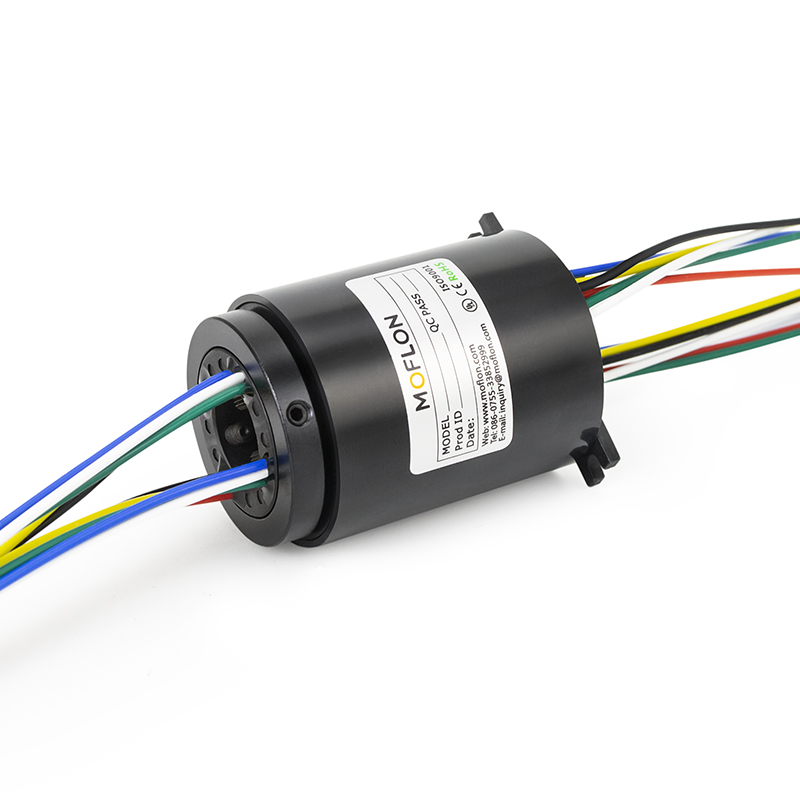
True performance isn’t born on the assembly line; it’s forged in the margins where standard processes fall short. While basic assembly ensures parts fit together, precision techniques transform passive components into a cohesive, high-functioning system. This involves real-time measurement feedback loops that correct micro-deviations before they compound, and material-specific joining methods that respect the grain structure of alloys rather than forcing them into submission. For example, controlled expansion fitting uses thermal dynamics to achieve interference joints without the stress fractures common to brute-force pressing. These methods aren’t about adding complexity—they’re about eliminating the invisible flaws that quietly erode durability and responsiveness over time.
Another layer of performance emerges when assembly becomes a holistic calibration ritual rather than a linear checklist. Technicians who master resonant frequency tuning, for instance, listen to how a structure vibrates under load and adjust fasteners to specific harmonic nodes, dramatically reducing energy dissipation. Similarly, surface energy management—applying monolayers of lubricant or adhesion promoters with angstrom-level precision—prevents micro-slip at interfaces, which is a primary cause of power loss in drivetrains. These techniques demand intuition and tactile sensitivity that automated systems cannot replicate, blending old-world craftsmanship with contemporary material science. The result is not just a product that meets specifications, but one that exceeds them in the unpredictable, dynamic conditions where performance truly counts.
Material Mastery: Selecting Components for Extreme Environments
Engineers pushing the boundaries of material performance often find that standard off-the-shelf components simply don't survive in the most demanding settings. Whether it's the scorching heat inside a jet engine, the corrosive salt spray of an offshore platform, or the relentless radiation in a nuclear facility, the wrong choice can lead to catastrophic failure. This is where a deep understanding of material properties isn't just an academic exercise—it's the quiet backbone of reliable design. It requires moving beyond datasheet limits and considering how materials degrade under complex, combined stresses that rarely appear in a specification sheet.
The secret lies in tailoring the selection process to the environment's unique fingerprint. For example, high-temperature alloys like Inconel cope well with thermal cycling, but even they can succumb to sulfidation if certain fuel impurities are present. Similarly, a polymer that resists UV degradation beautifully might crumble when exposed to industrial solvents. Effective material mastery means asking the right questions: What transient conditions exist during start-up or shutdown? Is there a risk of galvanic corrosion from dissimilar metals? These nuanced investigations separate a lasting assembly from one that fails prematurely, and they demand a blend of experience, testing, and a healthy skepticism of generic ratings.
Ultimately, the art of component selection for harsh conditions is a continuous learning loop. Failures, when they happen, become invaluable troves of data—a stress crack here, a discoloration there—each tells a story of how the environment outsmarted the material. Forward-looking teams treat this as feedback to refine their internal standards and simulation models. They also embrace unconventional solutions when needed, such as ceramic matrix composites for tasks where metals reach their thermal limits, or diamond-like coatings to fend off abrasive wear. In this relentless dance with extreme forces, material mastery isn't a destination; it's a persistent, curious exploration of what lasts and why.
The Role of Automation in Achieving Flawless Rotary Contacts
Precision in rotary contacts isn't simply about tight tolerances—it's about repeatability under dynamic conditions. Automation introduces a level of consistency that manual processes can't match, particularly when dealing with high-volume production runs. Robotic arms guided by real-time sensor feedback can adjust force, angle, and speed mid-operation, ensuring that each contact surface is treated identically. This eliminates the subtle variations that lead to micro-arcing, wear, and eventual failure.
One overlooked benefit is the inspection synergy that automation enables. Rather than relying on post-production sampling, integrated vision systems and eddy-current testing can instantly flag deviations before they become embedded in the finished product. This closed-loop approach means that the rotary contact not only meets geometric specifications but also exhibits uniform electrical properties across the entire batch. It's the difference between a part that passes a bench test and one that reliably performs over its full lifecycle.
Perhaps most critically, automation transforms the design conversation. When manufacturing engineers can trust that a process will execute identically thousands of times, they can explore geometries and materials that would be too risky with manual assembly. The result is a new class of rotary contacts that leverage unconventional surface finishes or hybrid conductive paths—innovations that simply aren't feasible when human variability is part of the equation.
Custom Engineering: Tailoring Slip Rings to Unique Industrial Demands
Every industry brings its own set of constraints—extreme temperatures, tight spaces, high vibration, or the need for hybrid signal and power transmission. Off-the-shelf slip rings rarely address these challenges outright. That’s where custom engineering steps in, shaping every component from the ground up to align with the operational reality of a specific application. We look beyond catalog specs, collaborating closely with your team to understand the exact torque requirements, rotational speeds, and environmental conditions your slip ring must endure.
The process isn’t just about altering dimensions; it’s about rethinking internal architecture. For a wind turbine, that might mean integrating fiber optic channels alongside high-current paths without sacrificing reliability under constant pitch movement. In robotic surgery, it could involve ultra-low noise electrical contacts that preserve signal integrity through thousands of sterile cycles. We often prototype with exotic materials—beryllium copper alloys for fatigue resistance, specialized sealing compounds for deep-sea applications—and validate designs through accelerated life testing that mirrors your real-world stress profile.
What separates a truly tailored solution is how it accommodates future flexibility. Rather than a one-off fix, we design modular interfaces that allow you to add circuits or upgrade data rates later without a complete redesign. This forward-looking approach reduces long-term costs and keeps your equipment adaptable as industry demands evolve. The end result is not just a component, but a precisely engineered rotary interface that feels like a natural extension of your machine.
Quality Tested, Machine Proven: Ensuring Reliability in Motion
Dependable motion starts long before a component reaches the field. Every material batch undergoes spectroscopic analysis to confirm alloy composition, followed by dimensional checks that exceed industry tolerances. Components are then subjected to sequential stress testing—thermal cycling, salt spray exposure, and vibration profiles replicated from actual operating environments. This layered approach catches flaws that single-phase inspections often miss, ensuring that only parts with proven structural integrity move forward.
The real verdict comes from machine-level trials. Prototypes run continuously under overload conditions, while torque, noise, and thermal signatures are logged in real time. Data from these runs isn't just a pass/fail metric—it's fed back into finite element models to refine critical geometries. When a design survives 10,000 hours of simulated field abuse without performance drift, it earns the trust to be called machine proven. That's the difference between a component that meets specs and one that keeps operations moving day after day.
FAQ
A slip ring transfers electrical power and signals from a stationary structure to a rotating one, keeping cables from tangling and allowing continuous 360-degree rotation in equipment like cranes, wind turbines, and robotics.
Tight tolerances in machining and assembly minimize contact resistance and wear. Surface finishes on rings and brushes are polished to microscopic levels, which prevents arcing and maintains consistent signal quality over millions of revolutions.
You’ll find them in CT scanners, packaging machines, radar systems, offshore cranes, and even amusement park rides—essentially anywhere a rotating joint needs uninterrupted power or data flow.
Every unit goes through dynamic testing under simulated load, speed, and environment conditions. Electrical noise, contact resistance, and temperature rise are continuously monitored, and some tests run nonstop for days to verify long-term durability.
Gold-on-gold contacts are common for low-current signals due to oxidation resistance, while silver graphite brushes handle higher power. Housings often use engineered plastics or stainless steel to withstand harsh surroundings.
Off-the-shelf designs rarely fit the space, rotational speed, and signal mix of specialized equipment. Custom engineering tailors the number of circuits, waterproofing, and even integrated fiber-optic channels to match exact application needs.
Extreme temperatures, dust, moisture, and vibration demand robust sealing and material choices. Balancing compactness with isolation between channels becomes a puzzle, especially when high-voltage power and sensitive data lines share the same unit.
Wireless and contactless designs using inductive coupling or capacitive transmission are reducing mechanical wear. Meanwhile, embedded sensors and IoT connectivity allow predictive maintenance, sending performance alerts before failures happen.
Conclusion
Behind every seamless rotation in modern machinery lies the intricate work of a slip ring factory, where craftsmanship and precision converge. Producing these essential electromechanical devices is far from a routine assembly task; it demands a deep understanding of connectivity. Skilled technicians approach each unit as a miniature engineering challenge, ensuring that rotating interfaces maintain uninterrupted power and data flow. Advanced techniques like fine-tuned brush alignment and micro-machined contact surfaces elevate performance beyond basic functionality, while the selection of specialized alloys and high-grade insulation materials guarantees durability even in corrosive, high-temperature, or high-vibration environments. Automation plays a critical role here, using robotic winding and laser-welding systems to achieve flawless rotary contacts with microscopic tolerances, eliminating inconsistencies that human hands alone could never avoid.
The true test of a factory’s capability, however, emerges when standard solutions fall short. Custom engineering becomes indispensable for industries ranging from wind turbines to medical robotics, where each application imposes unique constraints—space, speed, or environmental sealing. Engineers collaborate closely with clients, modifying designs from fiber-optic channels to pancake-shaped forms, always balancing performance with longevity. No unit leaves the factory without undergoing rigorous, scenario-based testing that simulates years of operation in minutes. Vibration, thermal cycling, and electrical noise are monitored until every slip ring demonstrates machine-proven reliability. This blend of artisanal skill, material science, automated precision, and bespoke design is what ultimately powers the modern machinery that society depends on, from offshore cranes to surgical arms.
Contact Us
Contact Person: Xiangpin Li
Email: [email protected]
Tel/WhatsApp: 86 186 1706 8578
Website: https://www.moflon.com