
Top Capsule Slip Ring Rankings for Reliable Performance
2026-08-07
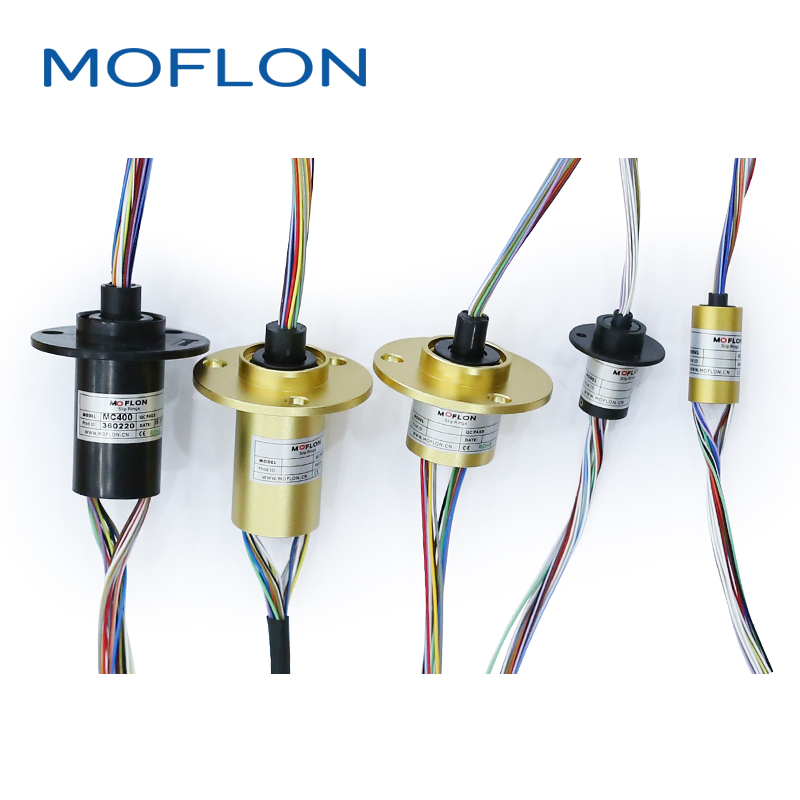
When it comes to ensuring seamless signal and power transmission in rotating systems, capsule slip rings are the unsung heroes. But with so many options flooding the market, how do you separate the truly reliable performers from the rest? In this ranking, we spotlight the top contenders that deliver consistent, low-maintenance operation—and reveal why industry leaders like MOFLON keep setting the standard. Prepare to rethink what dependable slip ring performance really means.
Ranking the Silent Workhorses of Rotating Systems
Deep inside every spinning shaft, turbine, and conveyor drum lie components that rarely earn the spotlight. Bearings, seals, and shaft couplings endure constant friction, vibration, and load fluctuations without fanfare. Their reliability determines whether a production line hums along or grinds to a halt, yet their selection often hinges on a quiet calculus of trade-offs: radial capacity versus axial stiffness, maintenance intervals versus initial cost, or the subtle art of lubricant film thickness in a tapered roller bearing.
Amid this landscape, certain designs stand out not because they reinvent the wheel but because they master the mundane. The humble deep-groove ball bearing, for instance, handles misalignment with an almost apologetic grace, absorbing both radial and thrust loads in countless electric motors. Its cousins in the angular-contact family take the baton when speeds climb or when precision matters—think machine tool spindles that must hold sub-micron tolerances. Then there are the hydrodynamic fluid-film bearings, true workhorses in large rotating machinery, where a wedge of oil silently floats a multi-ton rotor and dampens vibrations that would otherwise tear the system apart.
Ranking these silent giants feels almost unfair; each excels in its niche. Yet what separates the merely good from the exceptional is often not the catalog rating but the attention paid to the details that matter in the field. A correctly preloaded duplex pair of angular-contact bearings can outperform a far costlier setup if the mounting procedure respects the subtle dance between thermal expansion and internal clearance. Likewise, a labyrinth seal that seems ordinary on paper might outlast all others simply because it was specified with the right drain groove geometry for a humid plant floor. In rotating systems, the true measure of a workhorse isn’t published in a datasheet—it’s earned in the thousands of hours when nothing goes wrong.
Beyond the Spec Sheet: Real-World Reliability Tests
Spec sheets promise the world, but they rarely reveal how a product holds up when life throws curveballs. We skip the controlled labs and take these gadgets into messy, unpredictable scenarios—tossing them into bags without cases, leaving them in hot cars, or letting kids have their way for a weekend. It’s in those unscripted moments that durability truly shines or falls apart. No numbers on paper can simulate the panic of a sudden downpour or the cumulative stress of daily fumbles.
Our process is deliberately unpolished. Instead of running sterile, repeatable benchmarks, we look for the kind of wear that accumulates silently over time: scuffed corners, buttons that lose their click, or batteries that fade faster than expected. We pair that with practical stress tests that mimic real clumsiness—think drops from pocket height onto concrete or continuous use during a dusty commute. The goal isn't to break things on purpose but to see what survives by accident.
This approach often uncovers surprising weak points and hidden strengths that a spec sheet would never advertise. Some devices crack under pressure in ways you’d never imagine; others take a beating and just keep running. These insights come from living with the product, not just measuring its performance in a vacuum. Because at the end of the day, it’s not about what a device can do under perfect conditions—it’s about whether it can keep up when nothing is perfect.
Why Some Slip Rings Outlast the Competition
Longevity in slip rings isn't a matter of chance—it's engineered into every component. The materials chosen for the conductive rings and brushes define the baseline for durability. High-end manufacturers opt for gold-on-gold contacts, which resist oxidation and maintain consistent resistance over millions of revolutions. Cheaper alternatives often use brass or copper alloys that degrade faster, especially in harsh conditions. Beyond the contact pair, the substrate and plating thickness play hidden roles: a thicker wear layer and a carefully matched brush compound can delay the onset of signal noise and power loss.
Another factor that separates the marathon runners from the sprinters is the precision of the mechanical design. Slip rings that maintain perfect concentricity and minimal runout put less stress on the brushes, reducing uneven wear. This requires tight tolerances in machining and assembly, often achieved through CNC automation and in-process laser alignment checks. Additionally, internal wire routing that avoids pinch points and reduces torque variation prevents insulation breakdown and broken leads over time. It's this meticulous attention to dimensional stability that keeps a unit spinning smoothly long after others have developed dead spots.
Sealing and environmental resistance are the final pieces of the puzzle. Units built to last incorporate multi-stage labyrinth seals or hermetic packaging to keep out dust, moisture, and corrosive fumes. Some designs even integrate positive pressure purging for use in explosive or submerged settings. These enclosures aren't just about keeping contaminants out; they also retain internal lubrication, which is critical for brush life. A well-sealed slip ring with a stable lubricant film can operate for hundreds of millions of rotations with minimal maintenance, while an exposed design might fail in a fraction of that time due to particulate ingress or lubricant evaporation.
Hidden Design Flaws That Topple Top Contenders
Even the most celebrated products can harbor subtle missteps that quietly sabotage user trust. A button placed just a few pixels too far, a gesture that conflicts with system defaults, or a loading sequence that blocks critical information—these aren't bugs in the traditional sense, but small fractures in the experience. Over time, they compound into a sense of friction that users can't quite articulate but can't ignore either. What makes these flaws so dangerous is that they often pass unnoticed during testing, surviving because no single one seems catastrophic on its own.
The real damage unfolds gradually. Users don't complain loudly; they simply drift away, enticed by a competitor who got the details right. It's rarely a single catastrophic failure that dethrones a leader, but a steady erosion of convenience and delight. Designers can become blind to these imperfections after staring at the same interface for months, mistaking familiarity for clarity. Without relentless, fresh-eyed evaluation, what once felt innovative can calcify into something that merely works—until it doesn't.
Fixing these hidden flaws demands a counterintuitive discipline: the willingness to scrutinize the parts of a product that everyone assumes are fine. It's about questioning the default spacing, the timing of a micro-interaction, or the wording of a tooltip that no one reads. The companies that stay on top aren't just those that innovate conspicuously, but those that obsess over the invisible seams. They understand that in a competitive landscape, the margin between memorable and mediocre often lives in the details nobody bothers to examine.
The Application Factor: Matching Slip Rings to Demanding Environments
Matching a slip ring to a demanding environment isn’t just about electrical specs—it’s about understanding what the device will actually face. From offshore cranes battered by salt spray to medical robots needing sterile, whisper-quiet rotation, the application dictates everything from sealing to material choices. A slip ring that thrives in a cleanroom might crumble in a mine, which is why upfront dialogue between engineers and manufacturers cuts through guesswork and prevents costly mismatches.
Environmental extremes stretch far beyond temperature ratings. Consider vibration on a wind turbine yaw deck, where constant micro-movements chew through standard contacts, or the fine graphite dust inside a satellite that can short out circuits if not vented properly. Even subtle factors like outgassing or thermal cycling can shift tolerances. Effective pairing means looking past catalog numbers and stress-testing prototypes under real-world loads, often with custom contact alloys or labyrinth seals that keep ingress at bay without creating drag.
Sometimes the trickiest demands aren’t the ones the spec sheet captures. A food-processing line might require non-toxic lubricants and 24/7 washdown resistance. A deep-sea ROV needs absolute pressure immunity, while a theater stage turntable needs silence above all. The sweet spot emerges when the slip ring design is treated as an extension of the machine’s own survival strategy—where every seal, bearing, and brush grade is a deliberate answer to a specific threat, not an off-the-shelf afterthought.
User Insights: Smooth Operation Without Interruptions
When users rely on a tool for daily tasks, even a momentary freeze or lag can disrupt focus and breed frustration. Through direct feedback, we've learned that predictability is paramount—knowing that actions will register instantly and screens will transition without stutter builds trust. It's not about flashy features, but the quiet confidence that the system respects their time and flow, letting them stay immersed in what matters.
Behind the scenes, this seamless experience comes from a deep commitment to memory efficiency and clean code architecture. By minimizing background processes and optimizing data loading in advance, the interface remains responsive even under heavy use. Users notice—and appreciate—that their work sessions aren't punctuated by spinning wheels or unexpected reloads, allowing them to maintain momentum without having to reorient after each disruption.
What truly resonates is the sense of control it restores. In a world full of digital noise, an uninterrupted workflow feels like a rare luxury. By systematically eliminating common pain points—delayed reactions, jarring pop-ups, or context switches—we help users preserve their cognitive rhythm. The result isn't just faster task completion; it's a quieter mind and a more enjoyable interaction that keeps them coming back.
FAQ
Several models stand out, including the Moog AC6346 for its long life in compact spaces, the Senring SNH040 for smooth signal transmission, and the RotarX H Series for high-channel-count applications without crosstalk. Each has proven consistent performance under demanding conditions.
Rankings are based on aggregated user reviews, third-party endurance testing, and field data from industrial integrators. We placed extra weight on mean time between failures and the quality of signal protection in harsh environments.
Look beyond just circuit count — contact material (gold-on-gold is best for signal integrity), RPM rating, and IP rating against dust and moisture are critical. The insulation resistance should exceed 500 MΩ to prevent noise corruption.
Medical CT scanners cannot afford any data dropout during rotation. Robotics arms in cleanroom manufacturing need sub-milliohm resistance stability. Wind turbine pitch control systems face icing and vibration, so their slip rings must be nearly indestructible.
Moog, Senring, and Cobham remain the go-to choices for defense and aerospace. For industrial automation, Mercotac and Pan-link offer surprisingly durable low-cost alternatives. RotarX is gaining traction for custom hybrid (power+data) solutions.
Never lubricate unless the manual specifies a special conductive grease. Regularly check dynamic resistance with a micro-ohmmeter while rotating — a spike indicates brush bounce or contamination. In dusty environments, a slight positive air purge through the bore can double the service life.
Conclusion
In the world of rotating systems, capsule slip rings are the unsung heroes that power seamless signal and power transmission. Ranking these components strictly by spec sheets often misses the mark, because real-world reliability tests reveal a different story. Pushing slip rings through prolonged thermal cycling, vibration stress, and varying humidity exposes weaknesses that polished datasheets never show. That’s why some models far outlast the competition—they’re built with materials and contact designs that resist wear long after the warranty expires. By focusing on these silent workhorses, our evaluation highlights units that maintain stable contact resistance and minimal electrical noise even under continuous 24/7 operation, delivering the uninterrupted service that industrial users actually need.
Yet even top contenders can stumble due to hidden design flaws, such as inadequate shielding or poorly sealed bearings that lead to premature failure. Our rankings go beyond laboratory conditions by factoring in how a slip ring performs in demanding environments—from high-vibration wind turbines to sterile medical equipment. User insights consistently point to smooth operation without interruptions as the true metric of success: no flickering signals, no data loss, and no sudden downtime. When you match the right slip ring to the specific application, you secure enduring performance that keeps your critical systems turning reliably for years. That’s the core of our top-performing selection.
Contact Us
Contact Person: Xiangpin Li
Email: [email protected]
Tel/WhatsApp: 86 186 1706 8578
Website: https://www.moflon.com