
Top Ring Main Unit Manufacturers in China You Should Know
2026-10-20
China has long been a powerhouse in electrical equipment manufacturing, and ring main units (RMUs) are no exception. With so many suppliers vying for attention, how do you separate the truly reliable from the rest? From state-owned giants to innovative private players, the landscape is as crowded as it is competitive. And if you're looking for a name that consistently stands out in quality and service, keep an eye on CNKEEYA — a brand that's quietly redefining expectations. Here's our shortlist of manufacturers you need to know before making your next move.
Why China's Ring Main Unit Makers Are Winning Contracts Abroad
Price alone no longer tells the whole story behind the growing order books of Chinese ring main unit manufacturers. Utilities in Southeast Asia, the Middle East, Africa and parts of Latin America often face unstable grids, tight budgets and short delivery windows. Chinese makers have spent years refining compact, gas-insulated designs that survive voltage fluctuations and harsh climates—experience drawn from China's own massive rural and urban distribution upgrades. That hands-on engineering depth gives project developers confidence they will not be left troubleshooting a one-size-fits-all import.
Another factor is speed without sacrificing local certification. Many Chinese suppliers now hold type-test reports aligned with IEC, plus regional marks for markets like Indonesia, the Gulf or Brazil. Because they control the full supply chain—from vacuum interrupters to sheet metal enclosures—they can shorten lead times to eight or ten weeks when European competitors quote double that. This lets EPC contractors lock in delivery schedules and meet penalty clauses, a practical advantage that outweighs brand familiarity in cost-sensitive tenders.
The shift is also about service models rather than just hardware. Chinese ring main unit makers increasingly station engineers in target countries, offer local language training for utility crews, and stock spare parts in bonded warehouses. Such presence turns a one-off export into a multi-year relationship. Buyers who once worried about after-sales support now see Chinese suppliers as long-term partners, which is exactly what procurement boards want to hear when approving contracts far from home.
The Engineering Behind Chinese Ring Main Units: Not Just Copycats Anymore
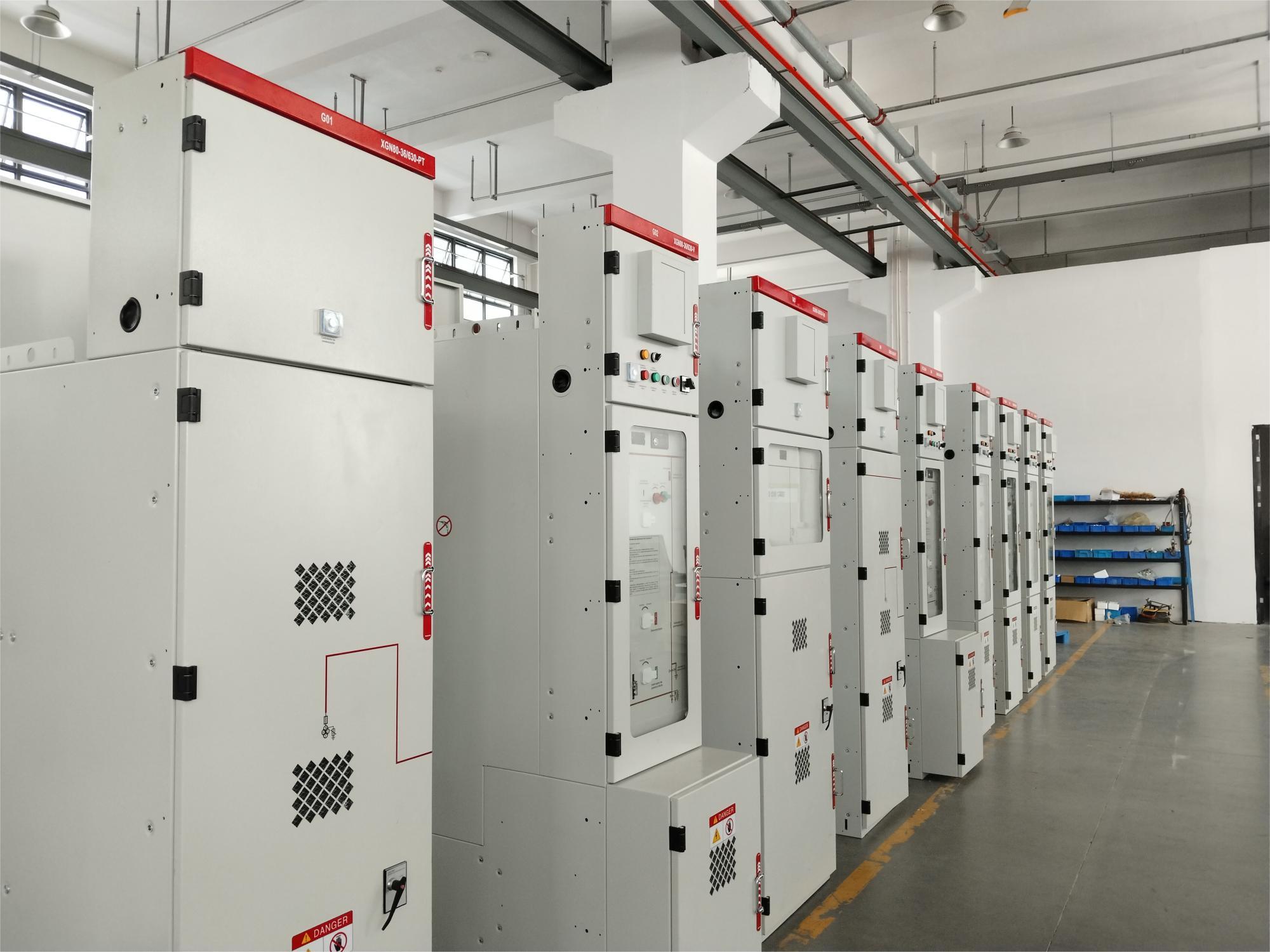
The first thing that stands out in a modern Chinese RMU is how thoroughly the design has been rethought for local grid realities. Early units borrowed heavily from European schematics, but today's domestic models integrate vacuum interruption with a three-position disconnector in a single sealed tank, shrinking the footprint while improving fault containment. The switch from SF6 to dry air or nitrogen mixtures wasn't just an environmental checkbox; it forced a complete redesign of insulation clearances and arc quenching paths, leading to patents that have little in common with the original templates.
Field conditions across China—coastal salt spray, high-altitude plateaus, and densely packed urban substations—drove another layer of change. Manufacturers now use epoxy resin encapsulation with alumina fillers to manage thermal expansion and partial discharge under humid, polluted conditions. Sealing systems are tested for years of thermal cycling, not just bench tests, because a poorly sealed tank in a subtropical basement will fail long before a factory certificate expires. This pragmatic, almost obsessive focus on environmental resilience is what separates engineered domestic units from generic clones.
Perhaps most telling is the evolution of protection and monitoring. Instead of bolting on third-party relays, Chinese RMU builders embed compact protection units that handle overcurrent, earth fault, and cable charging current without external wiring. Some units now include partial discharge sensors and temperature probes built into the bushing, feeding data to a local controller that can trip before a thermal runaway develops. None of this is copied from a legacy design; it reflects a deliberate engineering effort to make the RMU a smarter, more self-sufficient node in a rapidly changing distribution network.
Meet the Chinese Ring Main Unit Brands That Utilities Trust
When a utility engineer in China opens a tender for ring main units, they often find shortlists populated by names like Chint, Delixi, and Xiamen Huadian. These brands have quietly built a reputation among distribution network operators, not through flashy marketing, but by showing up on time, meeting the State Grid’s technical specifications, and keeping failure rates low across thousands of pad-mounted installations. In cities like Zhengzhou and Chengdu, it’s not unusual to walk along a commercial street and spot half a dozen RMUs from local manufacturers, each one bearing the subtle marks of a supplier that understands how Chinese utilities actually procure and maintain equipment.
The trust placed in these domestic players stems largely from their ability to respond to the peculiar demands of China’s grid. Unlike imported units that often arrive with standardized configurations, Chinese RMU makers routinely tweak busbar layouts, cable compartment dimensions, and protection relay settings to match provincial utility preferences. A single province may require a specific make of vacuum circuit breaker or a particular type of voltage transformer, and local brands are more willing than their multinational counterparts to accommodate such requests without lengthy approval cycles. Add to this the reality of logistics: a replacement part from Wenzhou can reach a substation in Jiangsu within a day, while an imported equivalent might take weeks.
Beyond basic reliability, the shift toward smart distribution networks has given these brands another edge. Utilities that once settled for simple load-break switches now expect RMUs with integrated fault passage indicators, remote terminal units, and even partial discharge sensors—features that Chinese manufacturers have rushed to embed at price points that keep annual maintenance budgets sane. Whether it’s an SF6-free unit designed for dense urban neighborhoods or a compact model meant for pole-top replacement in rural counties, the same few names keep reappearing in bid evaluations, not because they’re the cheapest, but because utility engineers have learned through years of operational data that these are the boxes that don’t let them down during a monsoon season or a summer load spike.
How to Choose a Chinese Ring Main Unit Supplier Without Getting Burned
Start by separating actual manufacturers from resellers. Many companies advertising Chinese RMUs are trading firms with no production line of their own. Request a live video tour of the workshop, not just brochure photos. Look for CNC punching machines, laser cutting equipment, and a dedicated SF6 gas filling station. Ask to see the business license scope; it should list high-voltage switchgear manufacturing. Also verify type test reports from a recognized lab like KEMA, CESI, or a CNAS-accredited facility. The report must match the exact model you are buying, not a similar-looking unit.
Once production is confirmed, dig into component sourcing and after-sales response. The vacuum interrupters or load break switches inside an RMU often come from a handful of specialized vendors; ask who supplies the main switching element and whether spare parts are stocked in your region or only shipped from China. Send a technical question on a weekend and see if an engineer, rather than a salesperson, answers within a reasonable time. Ask for at least two recent overseas buyers who purchased the same voltage rating, and contact them directly about delivery times and post-installation support. Pay attention to how warranty claims are handled; some suppliers offer long warranties but then shift blame to installation errors.
If feasible, arrange a short-notice factory audit instead of a heavily scripted visit. A supplier that demands weeks of preparation may be subcontracting the work. During the audit, inspect weld quality, paint thickness, and whether assembled units undergo gas leak testing. Check the production schedule to confirm they are actively manufacturing RMUs, not just staging a sample for your visit. Finally, lock in a delivery schedule with penalty clauses and a defined pre-shipment inspection point, so you are not left waiting while your project deadline slips.
Case Studies: Chinese Ring Main Units in Harsh Environments
Ring main units from Chinese manufacturers have faced some of the toughest operating conditions on the planet, and the results are worth examining. In a coastal substation project in Southeast Asia, for example, high salinity and frequent typhoons pushed standard switchgear to its limits. The installed Chinese RMUs were fitted with enhanced anti-corrosion coatings on enclosures and busbars, plus sealed cable compartments that kept moisture out during storm surges. Over three years of service, insulation resistance readings stayed within acceptable limits, and no flashovers were recorded even when relative humidity hovered near 100% for weeks.
A contrasting case comes from a mining operation in the Atacama Desert, where daytime temperatures swing from 5°C at night to over 40°C by noon, and fine conductive dust coats every surface. Here, the challenge wasn't corrosion but thermal cycling and particulate contamination. The RMUs used a pressurized internal arc chamber with filtered ventilation, and all secondary wiring was routed through dust-proof conduits. Operators reported that after two years, internal components showed only light dust accumulation, and breaker timing tests remained within the factory tolerance of ±2 ms, despite ambient temperature deltas of 35°C or more.
Perhaps the harshest test comes from a high-altitude photovoltaic plant in the Andes at 4,200 meters. Reduced air density derates insulation and cooling, while intense UV exposure degrades polymers. Chinese RMUs deployed there had to be re-rated for altitude, with wider phase spacing and nitrogen-filled sealed tanks to prevent internal arcing. After a full year of operation, including a −18°C winter and hailstorms, the units maintained uninterrupted power delivery, and infrared scans showed no hot spots above 65°C on any joint. These cases collectively show that with the right engineering adjustments, Chinese ring main units can handle environments that would cripple off-the-shelf equipment.
What's Next for Ring Main Units? Signals from China's R&D Labs
Chinese R&D labs are pushing ring main units toward significantly smaller footprints and smarter diagnostics. Over the past few years, engineers have focused on replacing traditional SF6 gas insulation with dry air or vacuum interrupters to slash greenhouse gas emissions. This shift not only aligns with tightening environmental rules but also leads to cleaner internal layouts, which in turn extends maintenance intervals. Several labs are now embedding partial discharge sensors directly into busbar joints, giving operators early warning of insulation breakdown before it becomes a costly outage.
Another signal worth watching is the rise of modular architectures. Historically, ring main units were highly customized, leading to long delivery times and complex on-site work. Now, Chinese suppliers are developing standardized functional blocks—breaker modules, load switch modules, metering modules—that snap together like building bricks. This approach lets grid operators expand capacity or swap a faulty module without taking the whole feeder offline. Lab tests indicate that modular connector interfaces have surpassed thousands of mating cycles, with reliability approaching that of traditional bolted connections.
Digitalization is a thread running through nearly every prototype coming out of China's research centers. Edge computing is being integrated directly into the secondary control system of ring main units. That means fault current analysis and isolation decisions happen locally, without waiting for a central command signal. Some demonstrators have shown fault location and isolation in under 20 milliseconds. At the same time, wireless communication modules are making retrofits of aging ring main units far less disruptive—no new control cables need to be pulled through existing ducts.
FAQ
A few names consistently come up in project tenders and utility procurement lists. XJ Electric and Pinggao Group are well known for high-voltage and medium-voltage switchgear, while Chint and Delixi have broad distribution networks and competitive pricing. Beijing Shuangjie Electric and Beijing Creative Distribution Automation focus heavily on RMUs for urban grids and industrial parks. Each has different strengths, so the right choice often depends on the specific voltage level and operating environment.
Test certificates and type-test reports from recognized labs like KEMA or CEPRI are non-negotiable. Also look for grid entry qualifications such as the State Grid or China Southern Power Grid supplier lists, which act as a basic quality filter. On-site operating records and response time for spare parts matter just as much as the unit price. It is worth asking for a reference site with similar climate and load conditions.
Yes, and the shift is accelerating. Many utilities now require dry-air or vacuum-based insulation for new projects, especially in urban underground substations where gas leakage is a concern. Chinese manufacturers have responded with compact solid-insulated and air-insulated designs that keep the same footprint while removing SF6. Some older capacity still uses SF6, but new tenders increasingly penalize it.
You will find them in urban distribution rooms, industrial parks, commercial basements, data centers, and renewable energy collection stations. They are also common in rail transit and mining operations because they can fit into tight spaces and allow quick fault isolation. The key advantage is that a single RMU can replace a small switchgear lineup and speed up cable network reconfiguration.
The gap has narrowed significantly in the past decade. Local brands typically offer 20-40 percent lower initial cost and much shorter lead times. For standard 12kV and 24kV applications, their reliability is now comparable to many European models. Imported units still lead in ultra-high parameter requirements, extreme environmental testing, or projects that demand a specific global service network. Many engineering firms now mix local RMUs with imported protection relays.
Three trends stand out: primary and secondary integration, digital monitoring, and compact eco-friendly insulation. Many new RMUs include built-in current and voltage sensors, condition monitoring, and communication modules ready for distribution automation. Manufacturers are also shrinking the width per functional unit and reducing the number of moving parts. These changes make remote operation and predictive maintenance more practical than before.
Some are, if you are willing to do the due diligence. A smaller factory may offer more flexible customization and faster response for special enclosures or non-standard busbar layouts. However, you need to verify their in-house testing capabilities, the origin of key components like vacuum interrupters, and whether they have delivered similar units to a utility or large industrial user. A low price without a proven track record can create expensive problems later.
Conclusion
China's ring main unit sector has moved well beyond cheap imitations, which is exactly why utilities across Southeast Asia, Africa, and Latin America now sign contracts with names like Chint, Delixi, SOJO, and Pinggao Electric. The tired assumption that Chinese switchgear simply copies European designs no longer matches reality: local R&D teams have delivered compact SF6-free units, embedded smart monitoring, and modular enclosures that survive coastal salt spray, desert heat, and high-altitude cold. Several of these brands hold decade-long field records with national grids, and their export models come with full type-test documentation aligned to IEC and other international standards, removing much of the friction foreign buyers once faced.
Choosing a dependable Chinese RMU supplier still requires due diligence, not just a glossy brochure. Ask for complete type-test reports, consider an unannounced factory visit, and verify whether the company has after-sales service networks in your region. Real-world case studies from Chilean mining operations, Indonesian island microgrids, and Middle Eastern oil fields show that Chinese units handle extreme temperatures, humidity, and vibration when the manufacturer designed for those conditions from the start. Looking ahead, signals from China's R&D labs point toward more solid-insulated units, integrated IoT diagnostics, and DC-ready RMUs for solar-plus-storage projects. For buyers, the gap between top-tier Chinese makers and established European brands is narrowing quickly, but the deciding factor should be engineering evidence, not price alone.
Contact Us
Contact Person: Queenie
Email: [email protected]
Tel/WhatsApp: +86 15558806611
Website: https://www.cnkeeya.com