
Top TFT LCD Display Supplier for High-Quality Industrial and Consumer Electronics
2026-05-11
In the world of modern electronics, TFT LCD displays are the visual backbone for both rugged industrial equipment and sleek consumer gadgets. Finding a supplier that consistently delivers high-quality screens with precision and reliability can be a challenge. That’s where Jingda-Display stands out. As a top-tier manufacturer, Jingda-Display bridges the gap between demanding industrial standards and vibrant consumer expectations, offering tailored solutions that drive innovation. Let’s explore what makes them a go-to partner for your display needs.
Redefining Display Clarity for Industrial and Consumer Devices
Imagine a control room operator catching a subtle alarm indicator from across the room, or a surgeon reading minute tissue variations on a high‑definition monitor. This level of visual precision doesn’t happen by chance—it stems from a fundamental rethinking of how panels process light, not just how many pixels they pack. By moving beyond conventional brightness and contrast specs, next‑generation displays are leveraging local dimming architectures and advanced optical bonding to eliminate washout under ambient glare, making every shade of gray and every color gradient distinctly visible even in punishing lighting conditions.
The shift affects more than just image crispness. In consumer devices, this redefinition translates to screens that adapt seamlessly from sun‑drenched outdoor settings to dimly lit rooms, maintaining true blacks and vivid colors without the battery‑draining brute force of maximum backlight. On factory floors, similar advances mean machine interfaces stay legible through dust and fingerprints, reducing operator fatigue and misreads. These improvements are grounded in multi‑layer anti‑reflective coatings and per‑pixel luminance control that work together to deliver a perception of depth and detail that static specification sheets can’t capture.
Perhaps most telling is how designers are now treating display clarity as a system‑level challenge, not just a panel problem. They’re tuning touch sensors to work through thicker protective glass without compromising optical performance, integrating haptic feedback that guides a user’s attention to the right part of the screen, and calibrating color accuracy to account for the specific environment where the device will live. This holistic approach ensures that whether it’s a handheld medical tablet or a ruggedized terminal on a shipping dock, the visual experience remains consistently sharp and intuitive, redefining what users expect from the screens they rely on every day.
Tailored TFT Modules That Adapt to Your Product Vision
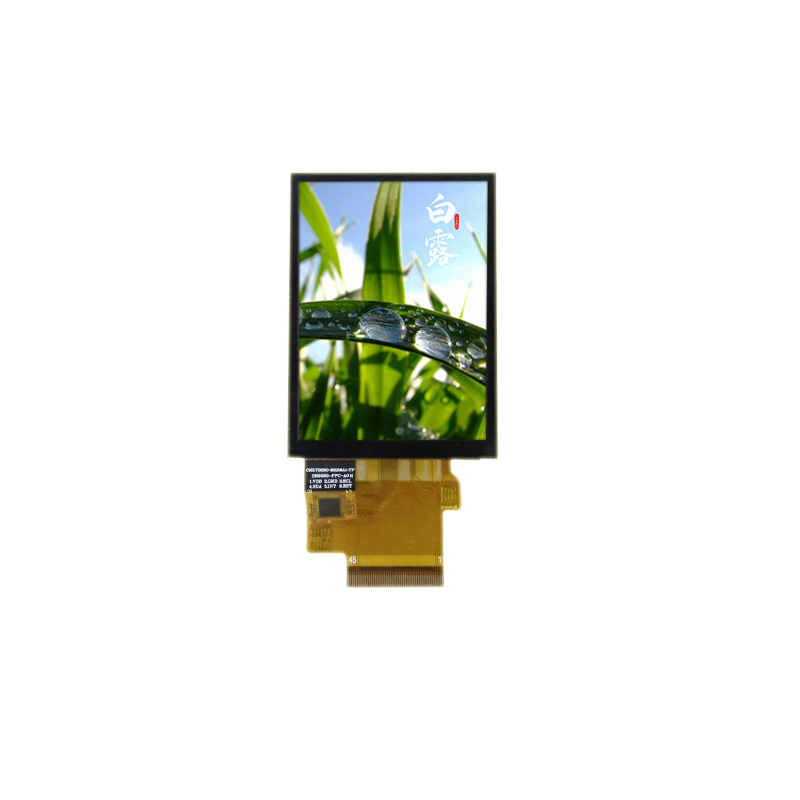
Every product has its own story, and the display should feel like an organic part of that narrative rather than an off-the-shelf afterthought. Our approach strips away the rigid constraints of standard modules, letting you define the exact resolution, interface, brightness, and mechanical footprint that match your industrial design. Whether you need a rounded-corner display that follows the curve of a wearable device, or a sunlight-readable panel with a specific aspect ratio for an outdoor kiosk, we treat each specification as a creative brief. The result is a module that feels like it was built solely for your product, from the mounting holes to the touch behavior.
Adaptability goes deeper than custom dimensions. We collaborate early with your engineering team to understand how users will interact with the screen in real-world conditions—considering ambient light extremes, gloved-hand touch scenarios, and even the viewing angle from a seated or standing position. This insight shapes the optical stack, cover lens hardness, and firmware tuning so that the display performs intuitively under actual usage, not just on a datasheet. By aligning every technical decision with your product’s intended experience, we avoid the compromise of generic solutions and deliver a module that feels invisible in the best way—its presence is seamless because it simply works as expected.
Engineering Grade Durability for Mission-Critical Applications
When every second counts and failure is not an option, the hardware must perform beyond typical expectations. Our engineering-grade components are forged from high-grade alloys and subjected to extreme stress testing that replicates years of field abuse in just days. From subzero cold to scorching heat, these systems maintain structural integrity without compromising precision.
We don't just build to meet standards—we exceed them by a wide margin. Every unit undergoes a barrage of shock, vibration, and pressure tests that would make lesser equipment crumble. The result is a product line that has earned the trust of first responders, military units, and industrial operators who rely on their gear as if lives depended on it—because often, they do.
It's not just about ruggedness for its own sake; it's about preserving functionality under duress. Sealed against moisture and contaminants, with redundant fail-safes baked into the design, these devices shrug off conditions that would sideline ordinary equipment. When the margin for error is zero, you need durability that's engineered into the DNA of every component, not just bolted on as an afterthought.
Bridging Performance and Affordability in High-End Displays
For years, the pursuit of top-tier display technology meant accepting a hefty price tag. Cutting-edge panels with high refresh rates, exceptional color accuracy, and HDR brilliance were reserved for professionals or enthusiasts with deep pockets. But the landscape is shifting, driven by smarter engineering and fierce competition. Manufacturers are finding clever ways to trim costs without gutting the core experience, using refined manufacturing processes and strategic material choices. The result is a new wave of displays that deliver 90% of the flagship experience at half the cost.
This sweet spot emerges from rethinking what truly matters to users. Instead of chasing every spec to its absolute limit, brands are prioritizing features with the broadest impact—like fast response times, wide color gamuts, and adaptive sync—while dialing back on less noticeable luxuries. For instance, a well-tuned IPS panel can now rival more expensive OLED alternatives in everyday use, especially when paired with effective local dimming. The gap between mid-range and premium has narrowed so much that the average buyer might struggle to justify the extra spend without a side-by-side comparison.
Practicality also plays a key role. Gamers and creatives alike benefit from this democratization of quality, enjoying fluid motion and crisp detail without sacrificing savings for other gear. The old rule of “you get what you pay for” still holds, but the baseline has risen dramatically. Today’s affordable high-end displays are a testament to industry maturity, proving that exceptional visual performance no longer demands a luxury budget. It’s a win for consumers who can now invest in a screen that genuinely enhances their work or play, without the buyer’s remorse.
From Concept to Scale: Seamless Manufacturing Excellence
Turning a raw idea into a product that rolls off the line by the thousands isn’t just about scaling up machinery. It’s a deliberate dance between design intent and production reality. Early on, our engineers embed themselves in the prototyping phase, sniffing out potential bottlenecks long before they become expensive lessons. This hands-on approach means tolerances aren’t just theoretical—they’re validated on the same equipment that will eventually run full tilt.
When the blueprint meets the factory floor, the magic happens in the feedback loops. Every pilot run teaches us something: a slight tweak to a fixture, a better way to sequence workstations, a material substitution that shaves seconds off a cycle without compromising integrity. These aren’t sweeping changes but small, cumulative acts of refinement that stack up into a process so smooth it hums.
The real test is volume. A process that works for fifty units can crumble at five thousand if we haven’t baked in resilience. We build in checkpoints that catch drift before it becomes defect, and we train operators not just to follow steps but to understand the why behind them. That cultural shift—from blind execution to engaged problem-solving—is what makes scale not a gamble but a measured stride toward consistent, high-quality output.
Collaborative Innovation That Sets Your Devices Apart
We believe real differentiation comes from the ground up. That's why we sit side-by-side with your engineering teams—not just as a supplier, but as a true extension of your R&D. By meshing our deep technical know-how with your unique product vision, we craft solutions that simply aren't available off the shelf. Whether it's a sensing module refined to detect subtle environmental shifts or a power system rebuilt for silent, week-long operation, every piece is shaped around how your device actually needs to perform in the field—not how a datasheet says it should.
This hands-on approach means we're not afraid to break the mold. We'll prototype novel material combinations, rewrite firmware from scratch, or rethink component placement to overcome a specific bottleneck you've been wrestling with. The result is something far more than a set of specs: it's a device that feels intuitive in your users' hands, operates reliably under conditions nobody thought possible, and quietly outshines everything else on the shelf.
FAQ
Industrial TFT LCDs often need enhanced durability, wider temperature ranges, and higher brightness for outdoor or harsh settings. Consumer displays prioritize compactness and power efficiency, while industrial ones may include ruggedized glass, improved viewing angles, and longer lifecycles to handle 24/7 operation.
Look for certifications like ISO 9001 or IATF 16949, and check their defect rate track record. Visiting the factory or requesting sample batches for burn-in tests can also help. A reliable supplier will share detailed inspection reports and ensure every panel passes stringent pixel and uniformity tests before shipping.
Resistive touchscreens respond to pressure and work with gloves, making them ideal for industrial machinery. Capacitive screens use electrical conductivity and offer multi-touch, smoother gestures for consumer devices like tablets. The choice depends on the end-use—whether you need precision in tough conditions or a sleek user experience.
It depends on their manufacturing setup. Some top suppliers keep flexible production lines for prototyping and low-volume custom projects, then scale up when needed. Ask about their minimum order quantities and lead time variations—transparency here indicates they can adapt without compromising on consistency.
Mismatched interfaces like LVDS, MIPI, or RGB can lead to integration nightmares and delay product launches. Confirming the supplier provides interface converters or custom cable solutions ensures your system architecture works seamlessly. It's especially important for mixed industrial-consumer applications where space and signal integrity vary.
LED backlights dominate for their energy efficiency and slim profile, but the configuration matters. High-brightness LED arrays improve outdoor readability, while adjustable PWM dimming prevents flicker in low-light consumer use. For industrial panels, long-lasting, uniform backlights without burn-in are non-negotiable.
Beyond price, prioritize design support, software driver availability, and a clear roadmap for panel upgrades. A supplier that offers in-house optical bonding or custom cover lenses can differentiate your product. Regular communication and a shared commitment to solving technical hurdles often matter more than the initial quote.
Conclusion
Finding a display partner that truly understands the demands of both industrial and consumer electronics can be a challenge, but the right supplier transforms that complexity into a competitive edge. By redefining visual clarity with advanced TFT technology, they ensure every interface—from rugged handheld scanners to sleek smart home panels—delivers sharp, vibrant imagery even under challenging lighting. What sets a leader apart is the ability to tailor LCD modules precisely to your product’s vision, offering custom resolutions, touch integration, and interface options that feel like a native extension of your design. This level of adaptation doesn’t come at the cost of resilience; these displays are built with engineering-grade durability, surviving extreme temperatures, vibration, and continuous use in mission-critical environments where failure isn’t an option. And while high performance often implies a steep price, the best suppliers bridge that gap, striking a balance that brings premium display quality within reach for high-end devices without blowing the budget.
The journey from a concept sketch to volume production is where manufacturing prowess really shows. A top-tier supplier streamlines the entire process with seamless scale-up capabilities, ensuring consistent quality from prototype to millions of units. But technical excellence alone isn’t enough—collaborative innovation is what makes products stand out. By working closely with your engineering teams from day one, they help refine designs, overcome integration hurdles, and introduce novel solutions that competitors can’t easily replicate. This partnership mentality transforms a standard supply chain into a strategic advantage, letting you ship devices that look better, last longer, and capture market attention. Ultimately, choosing the right TFT LCD supplier isn’t just about sourcing a component; it’s about gaining a dedicated ally that amplifies your product’s strengths and helps define what’s next in industrial and consumer electronics.
Contact Us
Contact Person: Vincent
Email: [email protected]
Tel/WhatsApp: 86 135 5485 1379
Website: https://www.jda-display.com/